

You may have heard that resistance training is the best form of exercise for fat loss. What many people don’t realise is that the goal of weight training is not to burn as many calories as possible.
Read on to learn why resistance training is the foundation of the U.P. methodology and why it is so important for optimising your body composition.
Key takeaways
- Resistance training helps us prevents muscle loss during periods of caloric restriction.
- We want to retain as much muscle as possible when dieting to avoid looking “skinny fat” and prevent negative adaptations.
- The U.P. methodology recommends training three to four times per week.
- A full body program allows us to optimise training volume, frequency and recovery.
- Where possible, avoid training on three consecutive days to give your body time to recover.
Resistance training is a type of exercise that forces your muscles to work against resistance provided by your own body weight, free weights (dumbbells and barbells) and machines.
When restricting calories to lose body fat, there is a risk that you will lose muscle.
Not only does this mean that you won’t look as “toned” or defined, it will also reduce your metabolic rate, meaning that your body requires fewer calories to function at baseline. This is known as low-quality weight loss and reinforces why losing scale weight should not be your primary goal.
Research has consistently shown that resistance training, in combination with a high-protein diet, can maintain or even increase muscle mass during periods of caloric restriction.
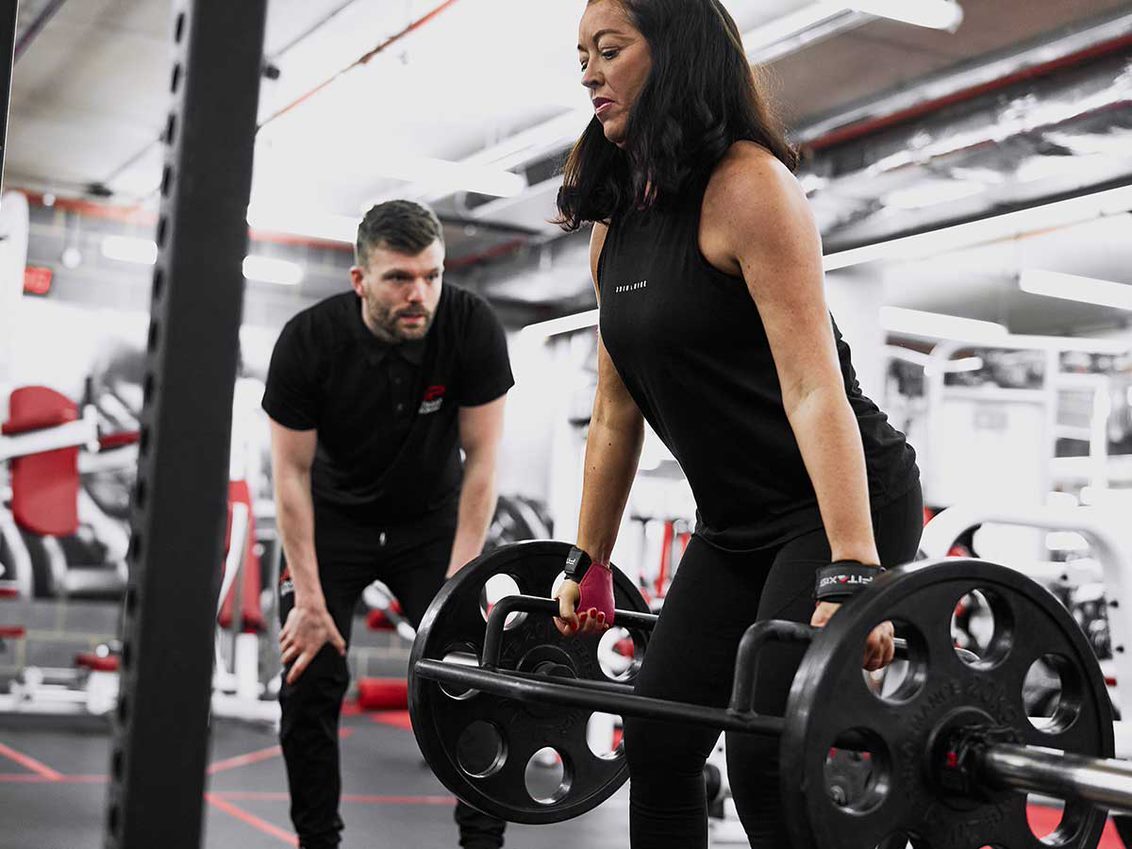
Resistance Training Recommendations
For the best results, we recommend resistance training three to four times a week.
Training frequency: 3 x per week
If you choose to train three times per week, we recommend alternating between two full-body workouts.
Using a full body program allows you to train each muscle group at least twice per week, which research suggests is the optimal training frequency for muscle growth.
After you have completed each workout 6-8 times, you will need to update both workouts by making changes to program design variables, such as exercise selection and the number of sets and reps.
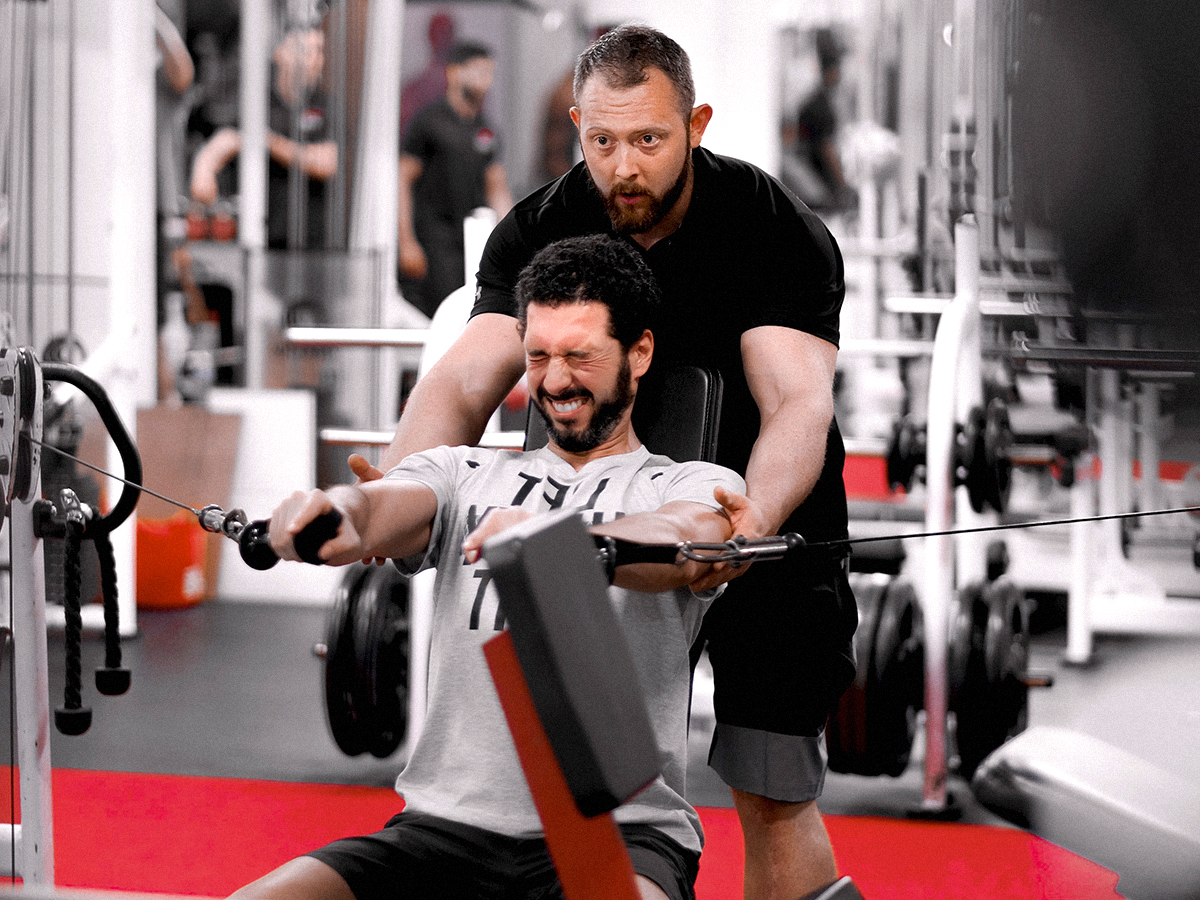
Training frequency: 4 x per week
If you choose to train four times per week, you can either use a full body approach or split your program into upper body and lower body workouts.
Repeat each workout twice per week until you have completed each one 6-8 times and then update both workouts.
Only choose the upper/lower body training split option if you are confident that you can consistently train four times per week.

Try to avoid training on three consecutive days, to give your body time to recover. Despite this, it is better than not training at all, and will not affect your results if you are generally on top of recovery (nutrition, sleep and stress management).
If you want to learn more about program design, check out our Principles of Muscle Building Program Design book.

