Poor adherence to your plan is the number one cause of progress stalls during a transformation, and more often than not, you’re not even aware of it.
Luckily, it doesn’t need to be complex. Increase the odds of your chances of success by following our golden rules for adherence.
Key takeaways
- Adherence measures how closely you follow the plan.
- We refer to any time that you don’t follow the plan as non-compliance.
- Non-compliance doesn’t always have to be deliberate – mistakes are just as likely to be a cause.
- Taking a “precision mindset approach” to tracking and meal prep is the easiest way to avoid unconscious non-compliance.
- Training adherence is also important. Take time to schedule your training and activity alongside your other commitments at the start of the week.

Adherence is a measure of how closely you follow the nutrition and training plan that you set up with the app at the start. A lack of adherence, also known as non-compliance, refers to situations where you deviate from one or more parts of the plan.
There are two types of non-compliance:
Conscious non-compliance: This is when you knowingly deviate from the plan, such as intentionally overeating, missing a workout or not taking enough steps.
Unconscious non-compliance: This is when you think you are following the plan, but you are not. For example, this could include underestimating the calories in a restaurant meal or misinterpreting an instruction.

How to track dietary adherence
Make sure to track your meals as you prepare and eat them rather than at the end of each day. If you need to guestimate your intake, make sure to check “estimated” rather than “accurate” when you add the food entry.
Don’t forget that you can also take a picture if you can’t fully track the meal. The more frequently you select “estimated”, the more adherence decreases.
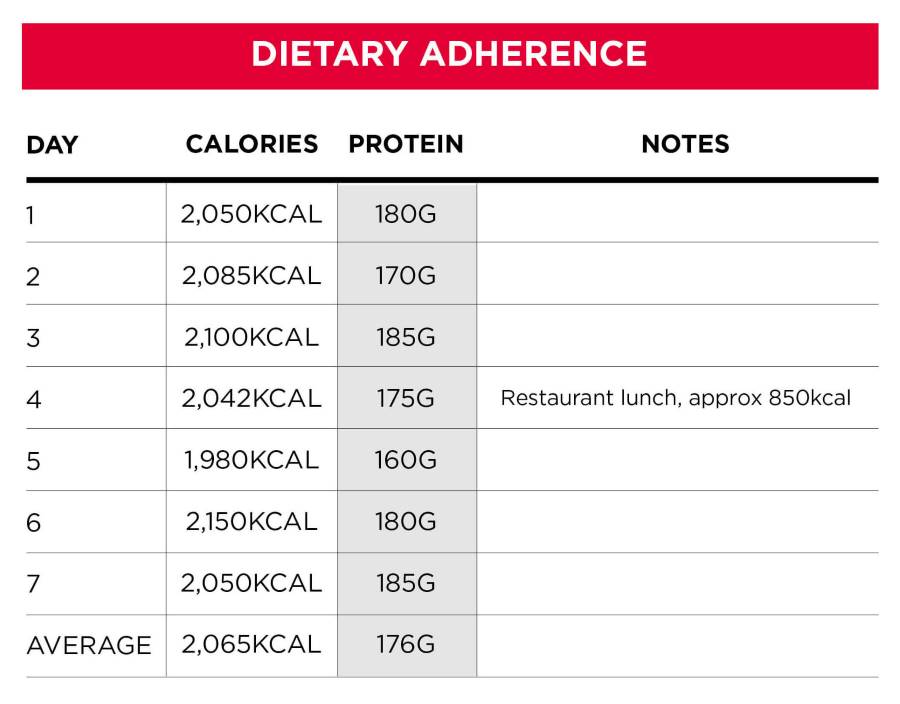
As you track through each week, the app will calculate your average calorie and protein intake. To do this, add up each day’s totals and divide by the total number of days. When you perform your weekly check-in, compare your actual data to your targets and see if they fall within the target ranges, e.g., +/- 50 kCal and +/- 10g protein.
How to track training adherence
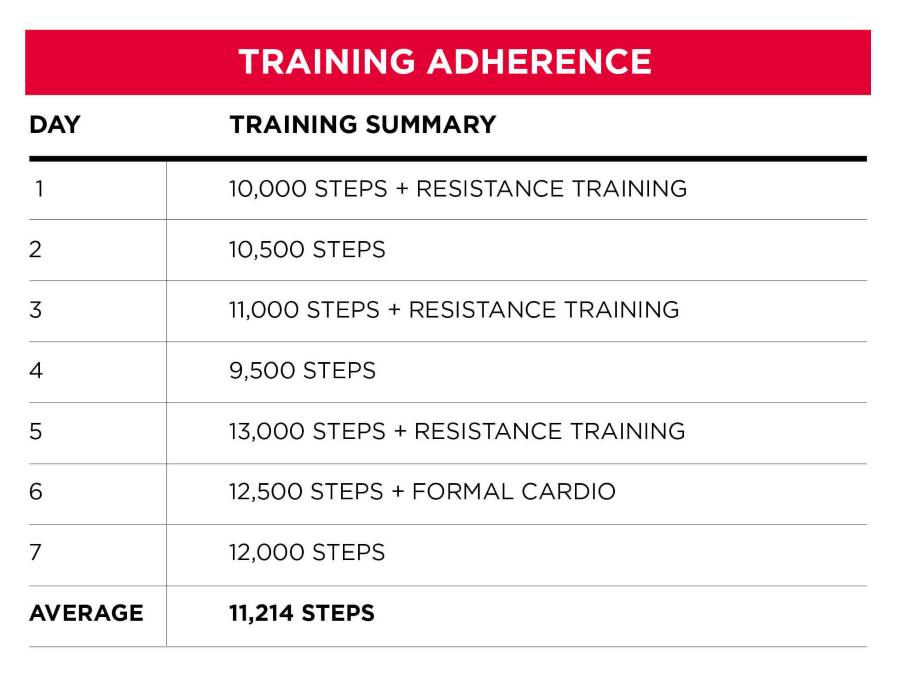
At the end of each week, make a note of how many of the scheduled resistance training and formal cardio workouts you completed. As you progress through the week, the app will calculate your average daily steps. If you met or exceeded the target, great! If you didn’t meet the step average for the week, what steps can you plan for next week to make sure you hit the target?
Make sure to check out “The Importance of An Active Lifestyle” article to learn about more ways you can increase your step count.