

Move more and eat less… sounds simple, right? While the premise of this may be true for fat loss, the reality of this is far from easy.
However, how much you move in day-to-day life plays a huge role in your transformation. We break down everything you need to know about becoming and staying active throughout your transformation and beyond.
Key takeaways
- Your activity levels outside of the gym have a big impact on your body composition.
- NEAT refers to non-exercise activity thermogenesis, which refers to how many calories you burn in day-to-day life.
- There is a voluntary and involuntary component to NEAT.
- We can’t control the involuntary component, but we can influence the involuntary part by making sure we are as active as possible in our daily lives.
- For most people, an initial goal of 10,000 steps is a good place to start.
- Build activity into your daily routine to make sure you can hit your goal consistently.

From a calorie-burning perspective, how physically active you are outside of the gym can have a real impact on your fat loss efforts. The technical term for how many calories you burn outside of the gym is non-exercise activity thermogenesis (NEAT for short).
Part of NEAT is voluntary, and largely determined by your occupation and how you choose to spend your leisure time. There is also an involuntary component beyond your conscious control that you generate from maintaining your posture and small bodily movements known as fidgeting.
The importance of an active lifestyle
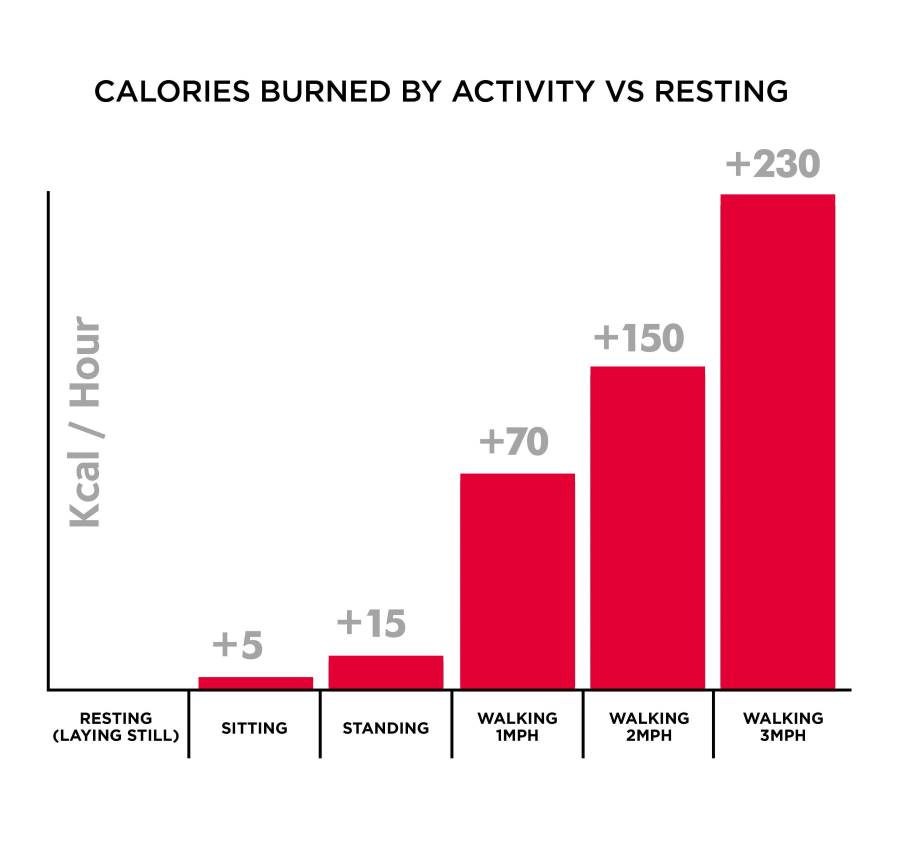
The diagram above shows the calories burned performing several activities. Sit down for an hour, and you will burn roughly 5 kCal more than you would be lying down still. Stand up and this triples to 15 kCal more per hour. Start walking and you can burn up to 230 kCal more per hour. While the exact values will vary depending on your body weight and how vigorously you move, these figures highlight how simply moving around more has the potential to add up to a surprisingly large calorie count over the course of a day.
In fact, Dr James Levine of the Mayo Clinic estimates that we have lost up to 2,000 kCal of activity from our day in the transition to becoming a mainly sedentary society – a full day’s worth of eating for a lot of people!
How active are you?
A simple test to evaluate your NEAT levels is to use your mobile phone or pedometer to track how many steps you take during a typical day. The table below shows the number of steps we consider to be representative of a sedentary and active lifestyle.
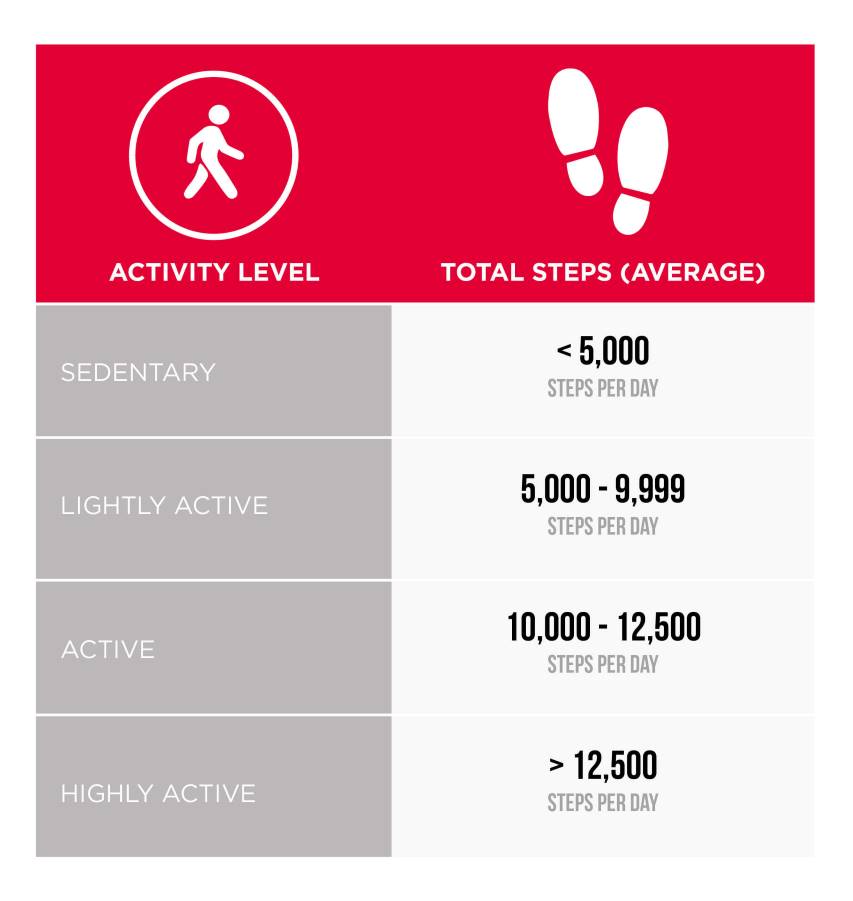
If you currently take less than 10,000 steps, you will benefit from making changes to your routine to become more active. On top of several health benefits, you will be less dependent on caloric restriction to lose body fat and will be able to diet on a higher number of calories.
Numerous research studies have also shown NEAT (mainly the involuntary component) to decline in response to weight loss, as an attempt by the body to conserve energy during periods of low energy availability.
This is a natural part of weight loss and simply your body doing its job, ensuring you have enough energy to keep going. Making an effort to keep voluntary components of NEAT high can help offset this adaptive reduction and prevent fat loss plateaus.

NEAT recommendations
Walking is the main component of most people’s NEAT, and you can track your step count using your mobile phone or pedometer.
Aim for a minimum average step target of 10,000 steps.
The target is an average, so you can make up for low-step days, such as long-distance travel, with more active days later in the week.
Where possible, aim for ‘active steps’, for example, making it a rule to take the stairs or walking at a brisk pace.
If you already take more than 10,000 steps as part of your normal routine, aim to keep this consistent.
4 ways to increase your activity levels
At home
- Start your day with 5-10 minutes of light exercise, e.g., bodyweight circuit.
- Go for a walk while calling friends and family.
- Go for a walk before or after dinner.
Travel
- Walk all or part of the way to work.
- Get off public transport early and complete the journey on foot.
- Park further away from destinations and complete the journey on foot.
At work
- Break up long bouts of sitting with standing, pacing or walking.
- Take phone calls and meetings standing or walking.
- Go for a walk on your lunch break.
For fun
- Set yourself NEAT challenges, e.g., 20,000 steps in one day.
- Make socialising active, e.g., bowling or table tennis.
- Plan leisure time around walking, e.g., exploring a new city or hiking.

