Plant-based diets have seen a resurgence in popularity in recent years, due to concerns over animal welfare, as well as huge environmental factors. While some agree that consuming a plant-based diet comes with slight disadvantages if you’re trying to improve your body composition, it shouldn’t slow down your progress.
Key takeaways
- It’s more than possible to achieve improvements in your physique and body composition following a plant-based diet.
- Protein “quality” becomes even more important on plant-based diets, as non-animal sources of protein contain fewer amino acids; building blocks required to break down and process proteins.
- Plant-based protein sources are likely to contain incidental calories from carbohydrates, and we need to consider their total calories compared to their protein content.
- Most plant-based trainees will benefit from consuming at least part of their daily protein intake in supplement form.
Many of our past clients have been vegetarian or vegan. Eating a plant-based diet is no impediment to achieving a great result.
However, the biggest challenge that most vegetarians and vegans face is getting enough protein, while controlling overall calorie intake.
For example, whereas protein accounts for 80% of the total calories in a 150 g sirloin steak, it only makes up 35% of an equivalent number of calories from almonds.
Total protein is not the only thing that matters
Proteins are made up of smaller subunits called amino acids. There are 20 different amino acids, nine of which are “essential amino acids” (EAAs), meaning that they are crucial.
The EAA content of a protein source is the primary determinant of its quality. Every meal does not have to include all the EAAs, but you do need to get enough of each type over the course of a whole day for the best muscle-building results.
Animal-origin protein sources contain all the EAAs your body needs and are “complete” proteins. In contrast, many (but not all) plant sources are deficient in one or more and are “incomplete”. While meat-eaters generally do not have to worry about their EAA intake if they meet their daily protein target, plant-based dieters need to be more strategic with their meal planning.
Protein-to-calorie ratio
An additional consideration for plant-based dieters is the protein-to-calorie ratio of protein-rich foods. For example, if you take a chicken breast, which is very low in fat, it has a very high protein to calorie ratio. Nearly all of its calories come from protein (100g of raw chicken equates to around 20g of protein, but only 2-3 grams of fat.)
However, most meat-free protein sources contain a combination of either protein and fat (in items like cheese) or protein and carbohydrates (such as lentils). If only a small percentage of a food’s total calorie content comes from the target macronutrient (in this case, protein), then you must consume larger servings and more calories to meet your target.
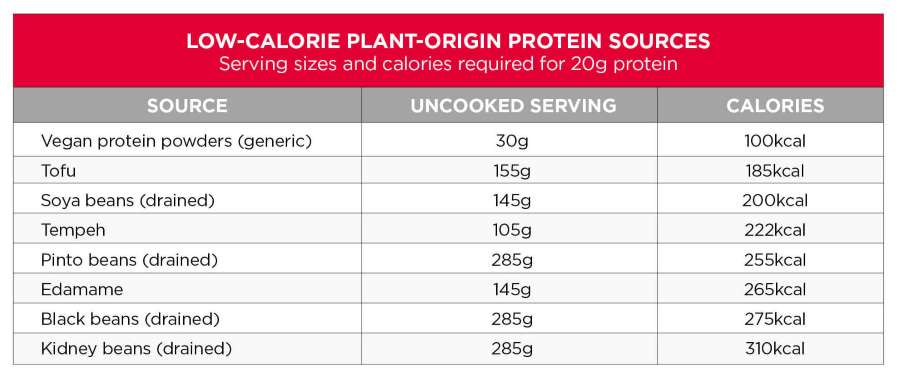
The table below lists some of the lowest-calorie plant-origin protein sources. Specifically, it shows the serving size required for 20g protein and how many calories this equates to.
We recommend consuming at least part of your daily protein intake in supplement form. Most health food stores also offer a varied selection of organic whole food meat alternatives.