


How to Train for Bigger Legs.
Legs not growing despite training hard? You’re not alone.
Building bigger legs can frustrate even the most experienced lifters.
Most people follow training programs that look fine on paper – deadlifts, squats, lunges, and leg presses – but the devil is always in the detail…
Progressive overload, training frequency, exercise order, rep ranges, intensity techniques – all need to be considered – as well, of course, as nutrition and recovery.
The good news is there are so many ‘levers’ you can pull to break through plateaus and add more muscle to your legs.
We have pulled together insights and techniques from our personal trainers at Ultimate Performance use in their own training programs.
This article breaks down why your legs aren’t growing, common mistakes you’re making, and gives you some advanced techniques to use in your own training that will maximise leg growth.
It answers your most common questions like ‘Do I need to squat for big legs?’ or ‘Should I lift heavy or high reps for most muscle?’ as well as sharing a workout you can try for yourself…
Why your legs aren’t growing (common mistakes)
If your legs refuse to grow, it’s time to face some hard truths. In most cases, lack of results comes down to training mistakes and poor priorities. Too many lifters simply don’t train legs with the same intensity or focus as their upper body. They might half-heartedly hit a few sets of squats, then call it a day. Skipping leg day or coasting through it will get you nowhere – leg muscles need effort, consistency, and training with intention to see results.
Another common mistake is training with the wrong rep ranges and form. We see people obsess over one-rep max squats or ego-lift with partial “quarter” reps and bouncing out of the bottom of movements. Chasing pure strength (like triples and singles) doesn’t necessarily equal leg size. In fact, the best bodybuilders (focused on hypertrophy) usually have far more muscular legs than the best powerlifters. Why? Because hypertrophy training emphasizes time under tension, controlled full range of motion, and muscle fatigue over sheer weight on the bar. If you’re doing sloppy, heavy singles or cutting depth to pile on plates, you’re short-changing your leg growth.
Finally, many fail to address weak links. Perhaps your quads dominate every exercise while your hamstrings do little work – or vice versa. Imbalances and neglecting certain muscle groups (like hamstrings or calves) can stall your overall leg development. If you always start with squats and end up with pumped lower back or glutes but minimal quad/hamstring stimulus, something’s off in your programming.
The bottom line? Most people who complain about “legs not growing” simply aren’t training hard or smart enough. Harsh but true. Don’t worry – the following sections will fix that. (We’ll also touch on diet and recovery later on, which are the other half of the growth equation.)

If your legs aren’t growing, chances are you’re not training them hard enough – or not training them right
Try training hamstrings first to prime leg growth
When was the last time you began leg day with hamstrings? For many, the answer is “never.” Yet flipping the script – training hamstrings before squats and quad exercises – can work wonders for leg hypertrophy. Here’s why: most lifters (except seasoned bodybuilders) have underdeveloped hamstrings compared to their quads. Starting with hamstrings targets this common weak point fresh, when you can apply real intensity. It also has a surprisingly beneficial effect on your subsequent squats. Pumped hamstrings act as knee stabilisers and give you a “cushion” in the bottom of a squat, making heavy squats feel more supported and effective. Top coaches have advocated leg curls first on leg day for years, and for good reason – it works.
In practical terms, begin your workout with a hamstring isolation like lying or seated leg curls (or glute-ham raises). Push these for moderate reps with perfect form and full range. By doing this, you ensure your hamstrings get the attention they deserve rather than being an afterthought. As a bonus, your knees will be thoroughly warmed up for heavy compounds next. Research even shows that squats alone don’t fully activate the hamstrings (during a squat the hamstrings lengthen at the hip but shorten at the knee, resulting in limited overall muscle fibre change). In other words, while squats do involve the hamstrings (for isometric stabilisation) they are no optimally training (or building) this muscle [1]. Leading with leg curls fixes that gap.
Training hamstrings for size isn’t just about sequence – it also requires hitting all their functions. The hamstring group has two primary roles: knee flexion (leg curl-type movements) and hip extension (think Romanian deadlifts, good mornings, hip thrusts). To maximise growth, you should train both functions. After your initial leg curls, later in the workout include a hip-hinge movement for hamstrings (for example, Romanian deadlifts) to work the muscle from a different angle. Hamstrings also have a mix of fast-twitch and slow-twitch fibres, so use a variety of rep ranges. Don’t be afraid to do some higher reps on leg curls (10–15+ per set) in addition to heavier low-rep work on exercises like deadlifts. This comprehensive approach will ignite new growth in your hamstrings, which often translates to overall bigger-looking legs.
(Trainer tip: Many of our trainers also like to train calves at the very start of leg day, before hamstrings. Calves are another commonly neglected muscle – doing them first means you won’t be tempted to skip them later. For more on that, see our guide on how to make your stubborn calves grow.)
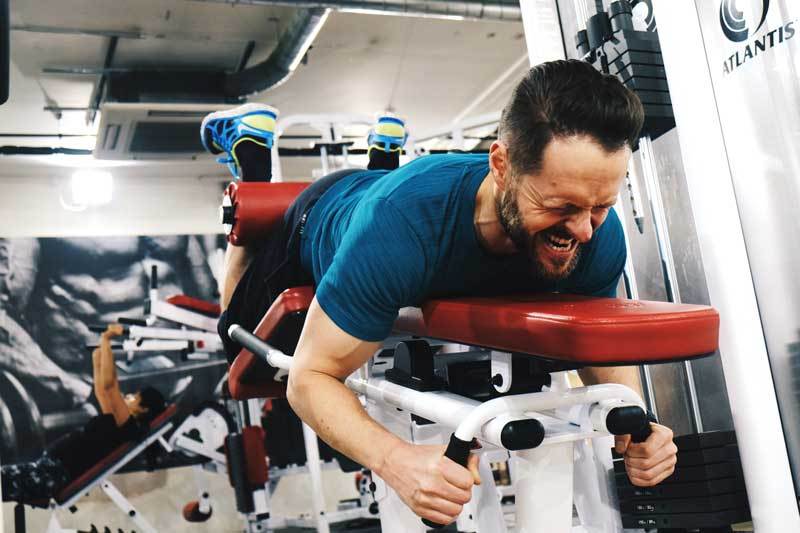
Starting with hamstrings can fire up the posterior chain – making your leg day training more effective.
Don’t think you HAVE to do squats
Squats have a near-mythical status in leg training lore – “squats are the king of exercises,” as the saying goes. And it’s true that a proper barbell squat is a fantastic compound movement for leg growth if your body is built for it and you can execute it with great form. But here’s the catch: not everyone is built to squat, and even if you are, squatting should not be your only tool for leg hypertrophy. To unlock maximum leg size, you may need to embrace alternative exercises that suit your structure.
Consider this: some people have body proportions that make squatting brutally hard on the lower back or hips rather than the quads. Long femurs, long tibias, or a short torso can turn a back squat into a mostly glute/hip exercise with minimal quad stimulation. If you’ve ever felt your lower back give out before your legs on squats, or you just can’t hit depth without your form collapsing, you might be one of those people. Pushing a barbell squat no matter what can become a recipe for injury or stalled progress. Legs not growing? Sometimes it’s because your main exercise isn’t actually hitting the legs effectively.
The good news is that there are plenty of squat alternatives that can build massive legs. Machines and variations can often bypass structural limitations. For example, a leg press allows you to load the quads heavily without taxing your lower back at all. You can adjust foot placement to emphasize quads or hamstrings and safely grind out high-rep sets to failure. Hack squats, Smith machine squats, and safety bar squats keep your torso more upright, shifting tension into the quads. These can be game-changers for lifters who struggle with the mechanics of a back squat. Even a well-performed split squat or lunge can rival the hypertrophy stimulus of a barbell squat, with the added benefit of improving single-leg strength and stability.
Don’t misunderstand – if you can squat deeply with good form and you feel your quads working hard, by all means keep squatting. Squats have built some of the biggest legs in history. Classic bodybuilders like Tom Platz swore by brutal high-rep barbell squats (Platz famously hit 500 lbs for 23 reps, and his leg development was legendary). But even Platz did plenty of other exercises too. And notably, six-time Mr. Olympia Dorian Yates built titanic legs without traditional back squats. Yates found that leg presses and hack squats allowed him to destroy his quads without risking the chronic injuries a barbell squat might have caused him. The takeaway: the best exercise for leg growth is the one that fits your body and that you can push with maximum intensity. For some, that’s squats; for others, it’s a leg press or machine. There is no single mandatory movement.
To maximise leg hypertrophy, incorporate a variety of compound exercises. This diversified approach ensures you’re stimulating all parts of your thighs. For instance, you might squat (or leg press) heavy for lower reps, but also include something like a Bulgarian split squat for higher reps to thoroughly fatigue the quads and glutes. By using multiple exercises, you can also train around fatigue – when your back is fried from squats, you can move to the leg press to continue hammering your legs safely. Ultimately, don’t be an absolutist. Squat if it works for you, but remember that no single exercise is irreplaceable. What matters is the effort and progressive overload you bring. Whether it’s squats vs leg press, the winner is whichever one you perform with great form and brutal effort.
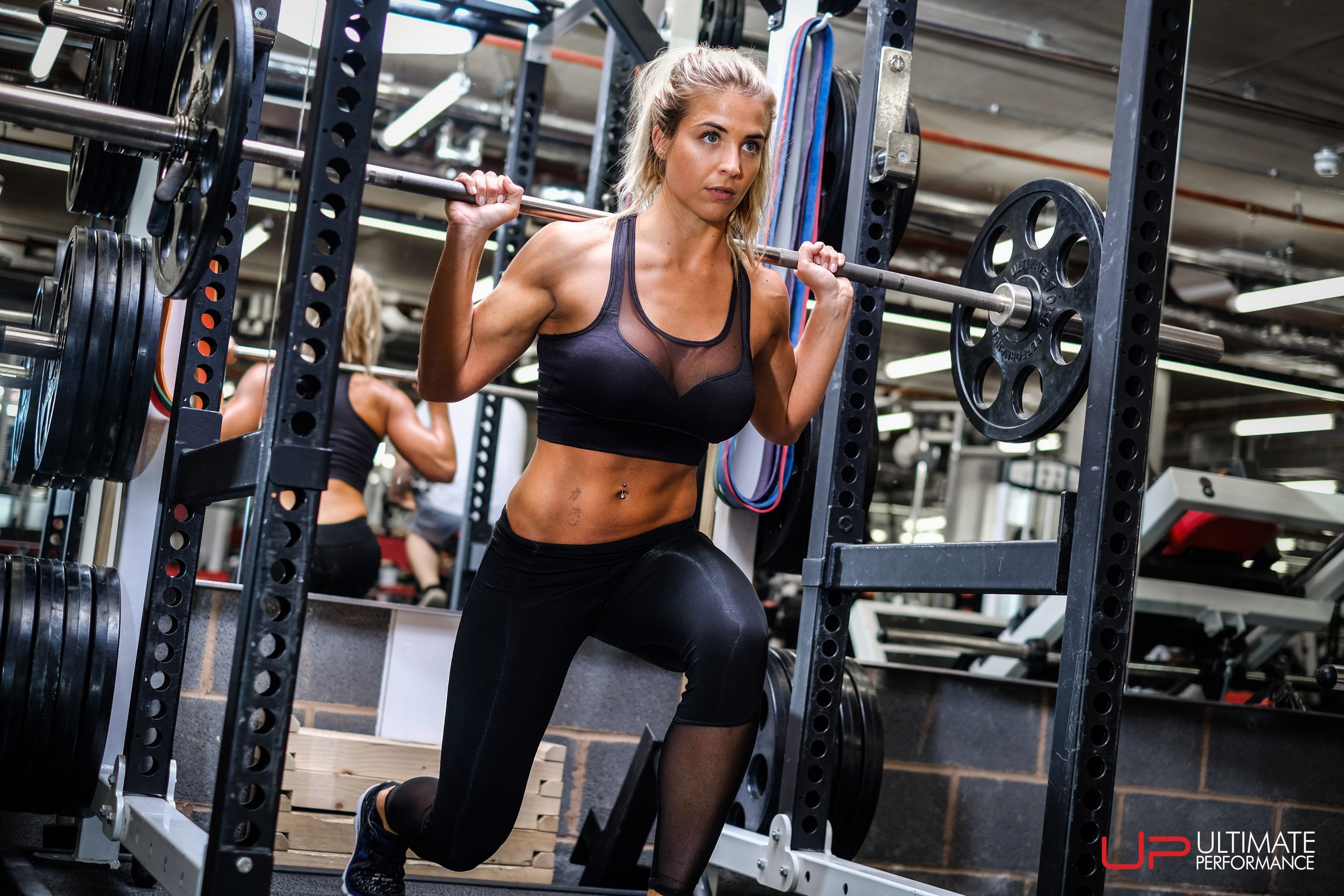
Squats aren’t mandatory for leg growth — pick the variation that fits your structure and gets results, like these split squats.
Use intensity techniques strategically for leg growth
If you’ve hit a plateau with your leg training and you’re not progressing, it might be time to think about introducing intensity techniques into your routine.
These are methods designed to push your muscles beyond their usual limits and create a stimulus for new growth. We’re talking about techniques like drop sets, rest-pause sets, negatives, supersets, giant sets and other “advanced” protocols that crank up the intensity.
You don’t want to be using these techniques on every single exercise – because too much excessive volume can add fatigue rather then acting as a stimulus.
But used strategically, these methods can spark leg hypertrophy even when standard sets no longer do the trick.
How do they work? In simple terms, these techniques amplify two key drivers of muscle growth: mechanical tension and metabolic stress. Mechanical tension is the strain from heavy loads – think of it as the force your muscles produce during heavy reps. Metabolic stress is the “burn” and pump you get from high reps, when your muscles are flooded with metabolites and pushed towards fatigue. Both factors stimulate muscle fibres to grow, albeit through different pathways. Normally, you might focus on one or the other (e.g. heavy low-rep squats for tension, or high-rep leg extensions for burn). Intensity techniques allow you to hit both, and to exhaust fibres that straight sets might leave untapped.
For example, a drop set on the leg press: you reach failure at 10 reps, then immediately strip off some weight and continue for another 8–10 reps, then strip more weight and continue – this extends the set beyond failure, recruiting additional fibres and creating an enormous burn.
Research backs the effectiveness of these methods. One recent systematic review found that drop-set training produced similar muscle growth to traditional sets, despite using much less total training time [4,5]. In practice, that means you can achieve equal or better hypertrophy by ruthlessly pushing a few sets via drop sets, compared to doing many straight sets. Another study noted that training to momentary muscle failure (which techniques like rest-pause and drop sets enforce) can maximise muscle fibre recruitment [6]. The caveat: these methods can be extremely demanding and should be used sparingly – and only when you’re a competent lifter with good form on foundational lifts. They are best reserved for the end of a workout or training cycle to avoid burnout or injury.
So how can you apply high-intensity techniques to leg day? One way is to pick one exercise and perform an all-out finisher set. For instance, load up the leg press with a weight that’s approximately your 10-rep max. Do 10 tough reps, then without racking the sled, have a partner quickly pull off a plate from each side and immediately continue for as many reps as possible. Keep “stripping” plates and repping out until you’ve done 3–5 drops. Your legs will be on fire by the end – this is often called a strip set or drop set. By the final drop, you might be doing 15+ reps with just a couple plates per side, barely moving the sled… That deep level of fatigue is something your body won’t forget, and it will compel your muscles to adapt (grow).
Other options: do a rest-pause set on leg extensions (go to failure, rest 15 seconds, squeeze out more reps, repeat), or incorporate giant sets (string 3–4 exercises back to back with no rest). For example, you could do a giant set of leg extensions, hack squats, sissy squats, and walking lunges, all in a row, 10-15 reps each, to completely exhaust your quads. The metabolic stress and occlusion from such a sequence drives hypertrophy through the roof. Just remember, these techniques are intense. You should not train like this every session or you’ll overtrain. Think of intensity techniques like hot sauce, a little goes a long way. Use them to spice up your training, not drown it. When used correctly (and infrequently), high-intensity techniques can be a great tool that finally gets those stubborn legs responding.
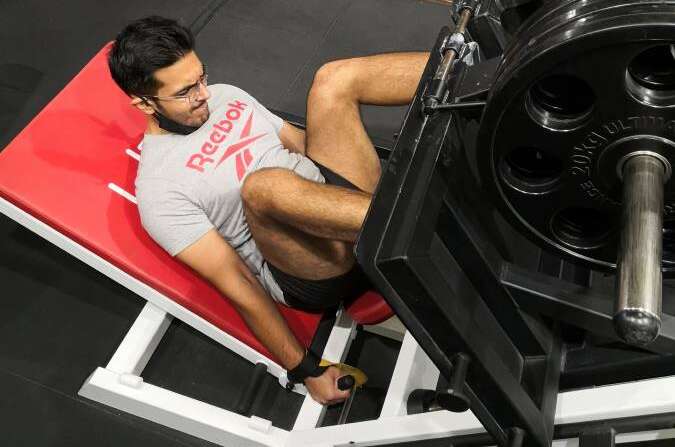 Drop sets and rest-pause can push you past plateaus – if you’ve earned the right to use them.
The most underrated leg exercise (walking lunges)
If you could only pick one exercise to finish off a leg workout – one that truly does it all – walking lunges might be the winner. Too often relegated to a token appearance or skipped entirely, walking lunges are arguably the most underrated leg exercise for building size and strength. They’re challenging, but that’s exactly why they’re so effective. A properly performed walking lunge will stimulate your quads, hamstrings, and glutes all at once, while also improving your balance, hip mobility, and core stability. It’s a full-package movement for leg development.
Why are walking lunges so potent? First, they work each leg individually (unilateral training), which helps address left-right strength imbalances and ensures both legs get equal stimulus. This is important for symmetry and overall strength. Second, lunges train a large range of motion – you’re taking a big step and lowering until your trailing knee nearly touches the floor. This deep stretch and long range is great for hypertrophy (muscles often respond to being worked in a stretched position). You also get a strong eccentric component when lowering into the lunge, which can induce muscle damage (another growth stimulus) – you’ll know what we mean if you’ve ever had sore glutes and hams two days after lunges! Finally, because it’s a dynamic movement, it recruits tons of stabilizer muscles. Your glute medius, adductors, and core all pitch in to keep your posture tall and balanced. It’s truly a complete lower body exercise.
Perhaps the only thing more notable than the benefits of walking lunges is how many people avoid doing them. Why? They’re challenging, they require a degree of skill, and they need to be done properly to see the benefits – that means not swinging through the movement, bouncing off the bottom, or not controlling the lowering phase. Done right, and walking lunges will have you gasping for air and fighting the urge to quit after just a few lengths of the gym floor. They lack the ego appeal of a heavy squat or leg press because often you’re just using bodyweight or light dumbbells, yet the burn can be even more intense. But that’s exactly why walking lunges produce results – they make you work really hard. If you push through the burn, you’ll be rewarded with new muscle. We’ve seen clients who plateaued on barbell lifts finally see their legs grow after a phase of high-volume lunges. It’s the different stimulus their body needed.
To do walking lunges correctly, keep your torso upright and core braced. Take a generous step forward, plant the front heel, and lower under control until your front thigh is around parallel to the ground (your back knee should hover just above the floor). Don’t let your torso collapse forward or your front knee cave inward – form is key. Then drive through the front heel to stand and bring your rear leg through into the next lunge. You can do these with just bodyweight, or hold dumbbells by your sides for added resistance once you’re strong enough. Aim for distance or high reps: for example, 3 sets of 20 steps (10 each leg) will humble even seasoned lifters. As fatigue sets in, maintain your form; no sloppy short steps. Trust us, if you consistently include walking lunges at the end of your leg workouts, you’ll notice improved leg size, shape, and durability. It’s not glamorous, but it flat-out works.
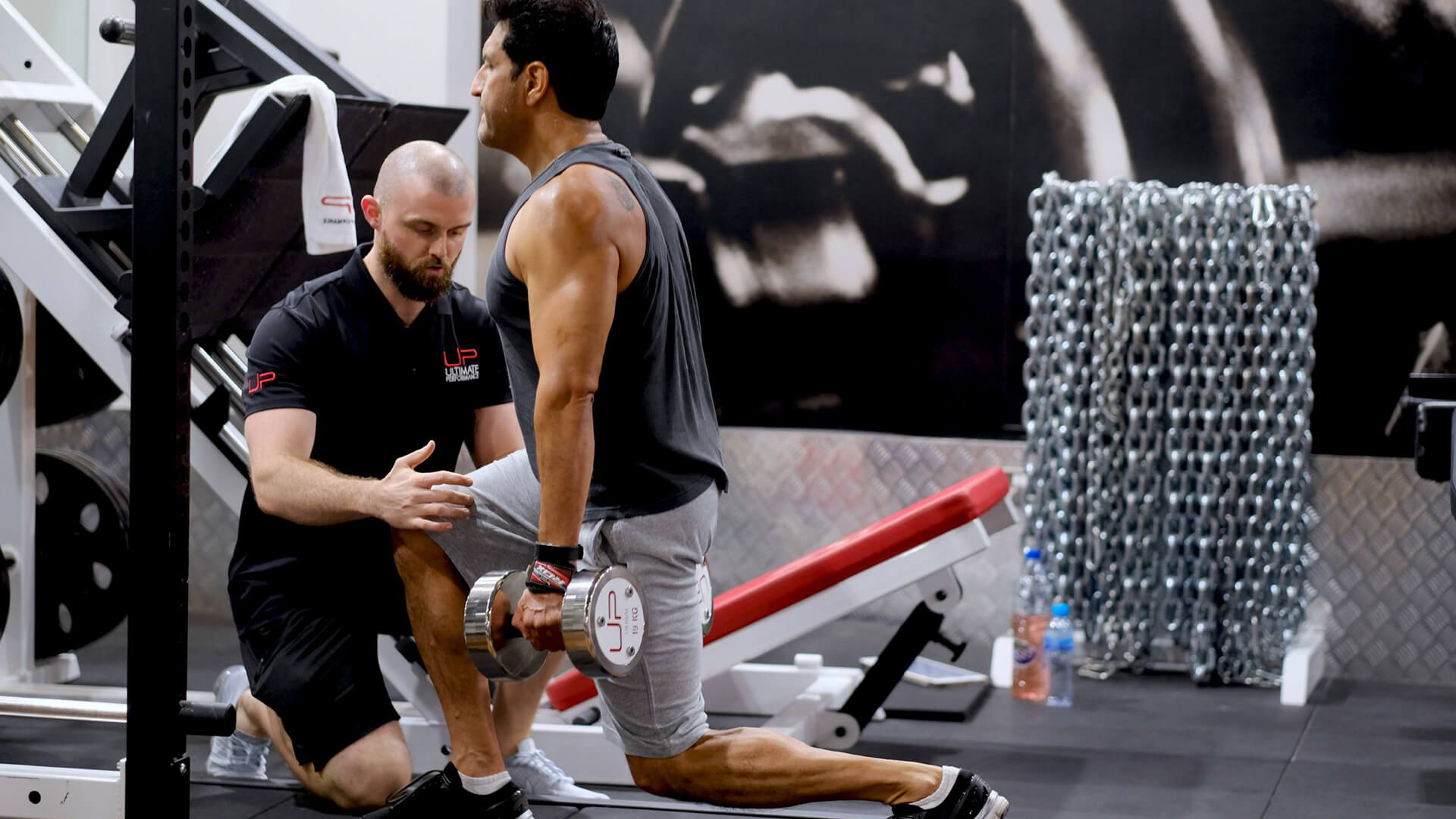 Walking lunges hit quads, glutes, and hamstrings in one – and leave no weakness untouched.
Mix heavy and high-rep training for maximum muscle
One of the best ways to spur leg growth is to stop thinking in either-or terms about your training and start embracing “both.” Heavy or light? Both. Low reps or high reps? Both! The legs (comprised of many different muscle fibres and motor units) respond to a combination of stimuli. To maximize hypertrophy, you should incorporate both heavy, lower-rep work and lighter, higher-rep work into your leg training. This approach takes advantage of all growth mechanisms and ensures no stone is left unturned in stimulating your muscle fibres.
Heavy training (let’s say in the 5–8 rep range) provides that high mechanical tension we discussed – it targets the biggest fast-twitch fibres and builds foundational strength. Exercises like heavy squats, leg presses, or lunges with a challenging weight fit here. These sets should be done close to failure (within 1–2 reps of failure) to recruit the most fibres. On the flip side, high-rep training (15, 20, even 30+ reps) creates massive metabolic stress and pumps. This tends to hit slow-twitch fibres and also pushes fast-twitch fibres to fatigue once the slow-twitch are exhausted. High reps are fantastic for isolations like leg extensions or finishing moves like a 20-rep squat set. They cause that deep muscle burn and cell swelling that signals your body to adapt and grow.
Science supports using a range of reps for hypertrophy. In fact, studies show that muscle growth can be achieved across a broad spectrum of loading ranges, as long as you train near failure [2]. In one meta-analysis, researchers found no significant difference in hypertrophy between programs using heavy loads (e.g. 5–8 reps) and light loads (20+ reps) when total work was matched [2].
The practical takeaway: you can grow just as much with 20-rep sets as with 6-rep sets. Each has its advantages, so why not use both? By mixing rep ranges, you’ll engage different muscle fibres and hit multiple pathways to growth (both myofibrillar and sarcoplasmic hypertrophy, for the nerds out there).
A classic example of this principle is the old-school bodybuilder approach on leg day: start with something heavy and low-rep, finish with something ultra high-rep. For instance, you might kick off with 4 sets of heavy squats in the 6–8 rep range to stimulate strength and mechanical tension. Then later, cap off the workout with a 20–30 rep finisher on the leg press or an all-out set of high-rep leg extensions for that insane burn. Arnold Schwarzenegger was known to sometimes do “breathing squats” for 20 reps – a weight he could barely do for 10, but he’d rest-pause his way up to 20 reps, forcing huge gains in leg size and endurance. You don’t have to go to that extreme, but the principle remains: combining heavy and high reps gives you the best of both worlds. Your legs get strong and get a pump. Over weeks of training, this yields more complete muscle development.
Practically, ensure each training week or training phase includes a mix. Maybe one leg day is focused on heavy compounds (5-8 rep sets with longer rest), and a second weekly session is focused on higher reps (10-20 rep sets, shorter rest, maybe more isolation moves). Or within a single workout, alternate between heavy sets and light burnout sets. This concept also ties back to an earlier point: body structure and exercise selection. On heavy work, pick exercises that allow safe maximal loading (maybe you leg press heavy instead of barbell squat if that’s safer for you). On high reps, choose exercises where you can really push without form breaking down (high-rep leg extensions or hip thrusts are safer than a 30-rep free squat, for instance). However you structure it, don’t pigeonhole yourself into one rep range. Advanced leg training uses the full spectrum – you build strength with heavy weight and build endurance and metabolic fatigue with high reps. The result? Maximum muscle fibre recruitment and maximum growth stimulus. Your legs will have no choice but to grow.
 Muscle grows across a full spectrum of rep ranges — as long as you train close to failure.
Sample leg day workout for bigger legs
So how do we put all these strategies together in a real workout? Below is a sample advanced leg day routine that integrates everything we’ve discussed.
It starts heavy with hamstrings first, paired with front squats. Then moves into high-volume tri-sets –the huge amounts of metabolic stress and blood flow will create a tonne of muscular tension and breakdown. Next, it’s back to hamstrings, but this time focusing on the hip extension portion, and specifically, the stretched position. To finish with, an all-out set of 50 reps on the leg press. You can rest-pause this two or three times in order to hit the reps, but you can’t lock the sled.
This workout is designed to stimulate your legs into new growth. It’s tough – but if you attack it with intensity and good form, you’ll understand what a truly effective leg workout feels like.
WORKOUT
A1. Prone leg curl – 4 sets of 8
Tempo: 30X1
Rest: 90 seconds
A2. Front squat – 4 sets of 6
Tempo: 31X0
Rest: 90 seconds
B1. Walking lunges – 4 x 20m
Tempo: 2010
Rest: 10 seconds
B2. Pendulum squat – 4 sets of 10
Tempo: 3010
Rest: 10 seconds
B3. Leg extensions – 4 sets of 10
Tempo: 2012
Rest: 120 seconds
C1. Dumbbell Romanian deadlifts – 3 sets of 12
Tempo: 3010
Rest: 90 seconds
D1. 45-degree leg press – 1 set of 50
Tempo: 2010
Nutrition, recovery, and frequency: the growth multipliers
Even the most perfectly planned leg workout won’t give you the results you want, if you don’t support it with proper nutrition, rest, and recovery. Building bigger legs isn’t just about what you do in the gym – it’s also about what you do in the kitchen and how you let your body recover between sessions. Think of training, nutrition, and recovery as three legs of a stool; remove one, and the whole thing collapses. Here are the key factors to get right:
Nutrition: Newbies can find it easy to gain that first flush of muscle. But to gain muscle as a more advanced lifter, you need to be in a calorie surplus (eating more calories than you burn). If you’re constantly dieting or not tracking your intake, your body may simply not have the energy reserves to grow. Focus on a diet rich in quality protein, complex carbs, and healthy fats. Protein is especially crucial, as it provides the building blocks (amino acids) for muscle repair. Aim for at least 2 grams of protein per kilogram of bodyweight (or about 1 gram per pound) daily. Spread it across the day to optimise absorption. Carbs are your friend around leg workouts – they fuel those brutal sessions and help spike insulin to drive nutrients into your muscle cells post-workout. Don’t fear carbs; strategically use them to power your training and recovery. Also, stay hydrated and consider adding electrolyte-rich foods (or supplements) if you sweat a lot during high-rep leg workouts.
Recovery and Rest: Remember that muscle grows between workouts, not during them. After you annihilate your legs in the gym, they need time (and nutrients) to rebuild bigger and stronger. Prioritise sleep as your number one recovery tool. Deep sleep is when your body releases the most growth hormone and carries out tissue repair. Aim for 7–9 hours of quality sleep per night. If you’re consistently getting under 6 hours, your muscle gains (and performance) will suffer greatly. In fact, sleep is arguably the second most important factor for muscle growth after training itself. During sleep, muscles that were torn down in the gym are rebuilt – skimp on sleep and you short-circuit this process. Make your bedroom a recovery sanctuary: dark, cool, and free of distractions, so you can sleep deeply.
Beyond sleep, incorporate rest days and light recovery sessions. You can’t train legs intensely every day – they’re a large muscle group and usually require at least 48-72 hours to recover from a hard session. Many advanced lifters actually grow better when training legs once per week hard, rather than doing too much frequency. Others might do two shorter leg sessions per week (for example, one focusing on quads, one on hamstrings). The key is that you allow enough recovery time so that you can progress in strength or reps each workout. Listen to your body: if your legs are still extraordinarily sore or your performance is down, take an extra rest day or focus on mobility work instead of forcing another heavy workout. Some active recovery like brisk walking, light cycling, or stretching can help blood flow to the muscles without stressing them further.
Training Frequency: A common question is “how often should I train legs to make them grow?” The answer can vary per individual, but generally 1–2 leg sessions per week is ideal for most. If you train legs once a week, make it count – hit all angles and fibres thoroughly (like the sample workout above) and then recover fully. If you train legs twice, you might split the volume (e.g., focus on squats and presses in Session 1, then deadlifts and lunges in Session 2). Research suggests that training a muscle group twice per week often yields better hypertrophy than once per week, provided you manage volume and recovery [3]. In one meta-analysis, subjects who trained muscles two times a week saw superior growth compared to those who hit each muscle only once weekly [3]. So, if you can swing it recovery-wise, try a twice-per-week leg schedule with moderate volume each time. Just avoid cramming too many leg days without rest, as that can backfire. More frequency is only beneficial up to the point where you can still recover and progress. Quality of training beats quantity.
Lastly, don’t ignore the “little” things that greatly aid recovery. The fundamentals will always be proper nutrition, good quality restorative sleep, and smart training.
Protocols like foam rolling, stretching, active recovery like walking or gentle swimming, and Epsom salt baths can help you feel better if you’re struggling with DOMS (delayed onset muscle soreness) after a tough leg workout. If your legs still aren’t growing, you’re either not eating enough, not training hard enough, or not recovering properly. Fix that.

Your legs won’t grow without recovery – and that starts with food, sleep, and smart programming.
Key takeaways
- Legs grow when you train them with INTENSITY and intelligence. If yours aren’t growing, check your effort and approach. Common mistakes like cutting reps short, favouring ego lifts, or skipping leg day will hold you back. Fix your training fundamentals first.
- Squats are great but not mandatory. You don’t have to barbell back squat to build big legs. Leg presses, hack squats, lunges, split squats and other variations can be just as effective, especially if they suit your body structure better. The best exercise is the one that hits your target muscles hard without undue injury risk.
- Use advanced intensity techniques sparingly to blast through plateaus. Drop sets, giant sets, rest-pause, and high-rep finishers can shock stubborn leg muscles into new growth – but they’re very demanding. Incorporate them occasionally for a few weeks, then back off to recover.
- Walking lunges are gold. This humble exercise can single-handedly improve your quads, hamstrings, and glutes. If you’re not doing them regularly, add them in – they build real-world strength and muscle in ways machines sometimes can’t. Embrace the burn and you’ll reap the rewards.
- Train heavy AND train high-rep. Don’t limit yourself to one rep range. Low reps with heavy weight build strength and tension; high reps build endurance and pump. The biggest legs typically result from a combination of both approaches over time. Remember, 5 reps and 20 reps can both induce hypertrophy [2] – so utilise the full spectrum.
- Nutrition and recovery are non-negotiable. To force your legs to grow, feed them! Eat enough quality calories (with plenty of protein) to be in a surplus. Prioritise sleep and rest days so your muscle fibres can repair bigger. You grow outside the gym. If you neglect this, no amount of squats will help.
You’ve learned the strategies – now it’s time to put them into action with a plan tailored to you. At Ultimate Performance, our world-class trainers have helped thousands of clients break through training plateaus and achieve unbelievable transformations. Whether you’re struggling with skinny legs, poor programming, or just need that extra push, enquire today and see how we can deliver you life-changing results.
REFERENCES
- Colado, J. C., Flandez, J., Juesas, A., Gargallo, P., Miñana, I., & Gene‑Morales, J. (2021). A systematic review on the muscular activation of the lower limbs with five different squat variations. Journal of Human Sport and Exercise, 15(4proc), S1277–S1299.
- Schoenfeld, B. J., Grgic, J., Ogborn, D., & Krieger, J. W. (2017). Strength and hypertrophy adaptations between low- vs. high-load resistance training: A systematic review and meta-analysis. Journal of Strength and Conditioning Research, 31(12), 3508–3523. https://journals.lww.com/nsca-jscr/fulltext/2017/12000/strength_and_hypertrophy_adaptations_between_low_.31.aspx
- Schoenfeld, B. J., Ogborn, D., & Krieger, J. W. (2016). Effects of resistance training frequency on measures of muscle hypertrophy: A systematic review and meta-analysis. Sports Medicine, 46(11), 1689–1697. https://link.springer.com/article/10.1007/s40279-016-0543-8
- Fink, J., Kikuchi, N., & Nakazato, K. (2018). Effects of drop sets on skeletal muscle hypertrophy: A pilot study. Journal of Exercise Science & Fitness, 16(3), 74–77. https://pubmed.ncbi.nlm.nih.gov/28474868/
- Enes, A., Alves, R. C., Schoenfeld, B. J., Oneda, G., Perin, S. C., Trindade, T. B., et al. (2021). Rest‑pause and drop‑set training elicit similar strength and hypertrophy adaptations compared with traditional sets in resistance‑trained males. Applied Physiology, Nutrition, and Metabolism, 46(11), 1417–1424. https://cdnsciencepub.com/doi/10.1139/apnm-2021-0278
- Morton, R. W., et al. (2016). Neither load nor systemic hormones determine resistance training-mediated hypertrophy or strength gains in resistance-trained young men. Journal of Applied Physiology, 121(1), 129–138. https://pubmed.ncbi.nlm.nih.gov/27174923/

