

A common mistake that many dieters make is getting caught up in what the scale says. While body weight is an important metric for progress, it can fluctuate day-to-day. But you don’t need to fear fluctuations if you follow these tips.
Key Takeaways
- Body weight naturally fluctuates based on a variety of factors, so we need to be careful about jumping to conclusions.
- Everything from carbohydrate and sodium intake to food choices and the menstrual cycle can affect body weight.
- If your weight spikes or drops suddenly, consider what you have done in the previous 24 hours and be realistic – fat loss or fat gain cannot occur in such a short period.

Body weight changes provide valuable feedback, but you need to interpret them carefully.
When the scale moves up or down it only tells you how much you have lost or gained, not what you have lost or gained.
Your body weight can fluctuate daily by 1-3% without any change in your current amount of body fat or muscle mass. Daily fluctuations are mainly due to changes in your body’s water balance (“water weight”) and the amount of food retained in your system at any given time.
The table below details the long list of factors that can cause your body weight to fluctuate.
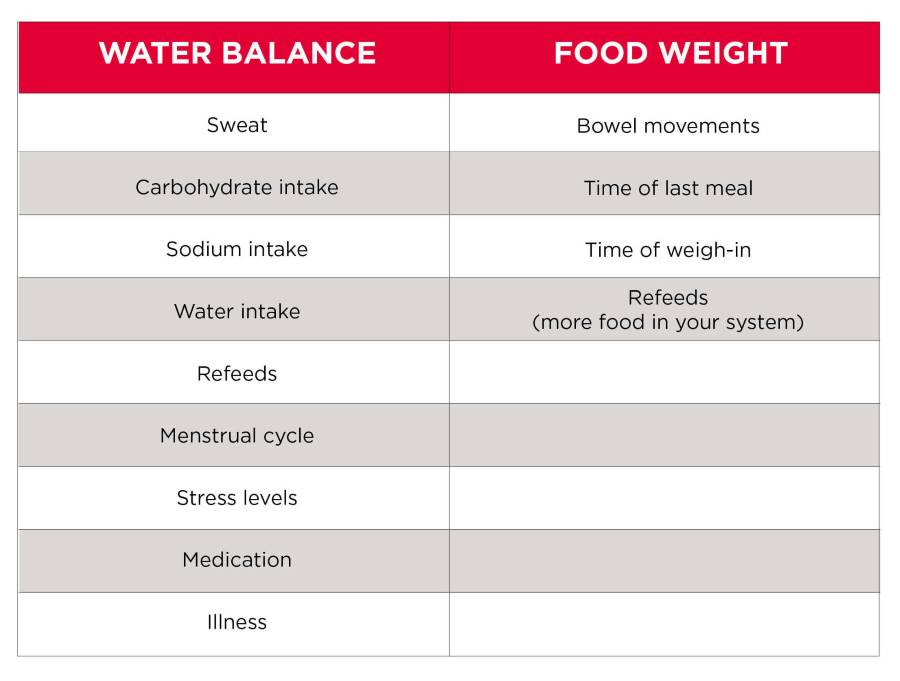
Remember that a single pound of body fat (0.45kg) contains roughly 3,500 kCal. Based on this assumption, we can say that:
- To store one pound of body fat, you need to consume at least 3,500 kCal more than your maintenance calorie intake.
- To lose one pound of body fat, you need to consume at least 3,500 kCal less than your maintenance calorie intake.
Weight loss is not a linear process, and several weird things happen to your body weight over the course of your transformation.
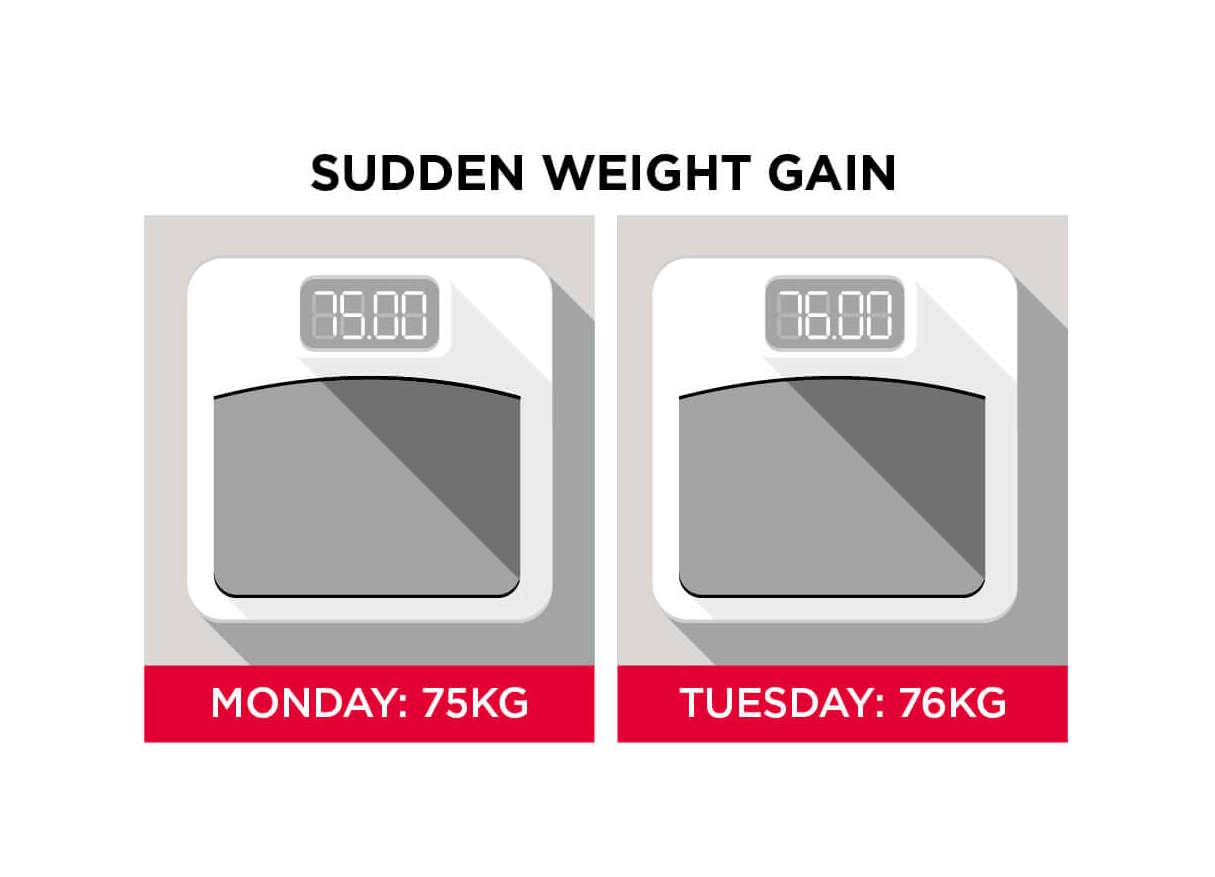
The images below show how your body weight can fluctuate and how you can use the 3,500 kCal test to stay calm when stepping on the scale.
Female body weight fluctuations
A woman’s body weight can fluctuate very little or by as much as several pounds over the course of her menstrual cycle – typically peaking before menstruation.
A comprehensive overview of the menstrual cycle is beyond the scope of this article. However, we do recommend tracking your cycle and consulting a medical professional if you have any concerns.
There are several smartphone applications you can use, or you can keep a manual record, recording the first day of your period as ‘1’, and so on.
Recommendations
Follow the best practice outlined above when measuring your body weight. Try to view your daily weigh-in as data collection and focus on the weekly average.
Use the ‘3,500 kCal test’ to troubleshoot body weight fluctuations. If your body weight shoots up overnight, ask yourself, ‘did I massively overeat yesterday?’, If the answer is no, then you are simply retaining water or have more food in your system than normal.
The best ways to manage water retention are to stay hydrated, eat plenty of vegetables, exercise and be consistent with your diet.

