

Did you know that being dehydrated by just 2% can increase our perceptions of fatigue, impair cognitive functions such as memory and attention, and alter mood? Your water intake might not be the first thing you think of when you think body composition.
However, let’s take a moment to focus on why the wet stuff is so important for mood, performance and all-round health.
Key takeaways
- Ensuring you are properly hydrated is vital for optimal health, performance and body composition.
- Just 2% dehydration can reduce cognitive function significantly.
- Men should aim for at least 3.7 litres per day and women 2.7 litres of fluids per day.
- All fluids, including teas, coffees and other drinks, contribute to fluid intake.
- Alcohol has a purely dehydrating effect and does not count towards your fluid intake.
- Up to 400mg of caffeine per day has not been shown to raise any safety concerns in healthy adults.
- Diet sodas do not cause any harm in moderation and can help improve adherence while dieting.
We all know that staying properly hydrated is extremely important and being just 2% dehydrated significantly reduces cognitive function. Symptoms of dehydration include headaches, irritability and impaired cognitive function and exercise performance.
Consuming fluids can also help with fat loss. Drinking a glass of water or other fluids before a meal has a filling effect which reduces the chances of overeating.
No fluid intake formula or guideline fits everyone perfectly. Hydration status is very individual and affected by factors such as the climate you live in, and how much exercise you perform.
We recommend aiming for at least 2.7 litres per day for women and 3.7 litres per day for men. The following hydration habits can help you hit this goal:
- Fill up a big bottle of water (1-2 litres) and make it your goal to drink one at separate points throughout the day.
- Drink a large glass of water when you wake up (after weighing yourself) and then with every meal.
- Drink before, during and after exercise to replace water loss from sweating.
- All fluids, including coffee and tea, count towards your total. The only exception is alcohol, which has a purely dehydrating effect.

Caffeine intake
The most common sources of caffeine are coffee, tea, sodas, energy drinks and pre-workout supplements.
In 2015, the European Food Safety Authority (EFSA) published a report advising that consuming up to 400mg per day from all sources does not raise safety concerns in healthy adults. To help put this in context, the table below shows the caffeine content of some popular caffeinated drinks.
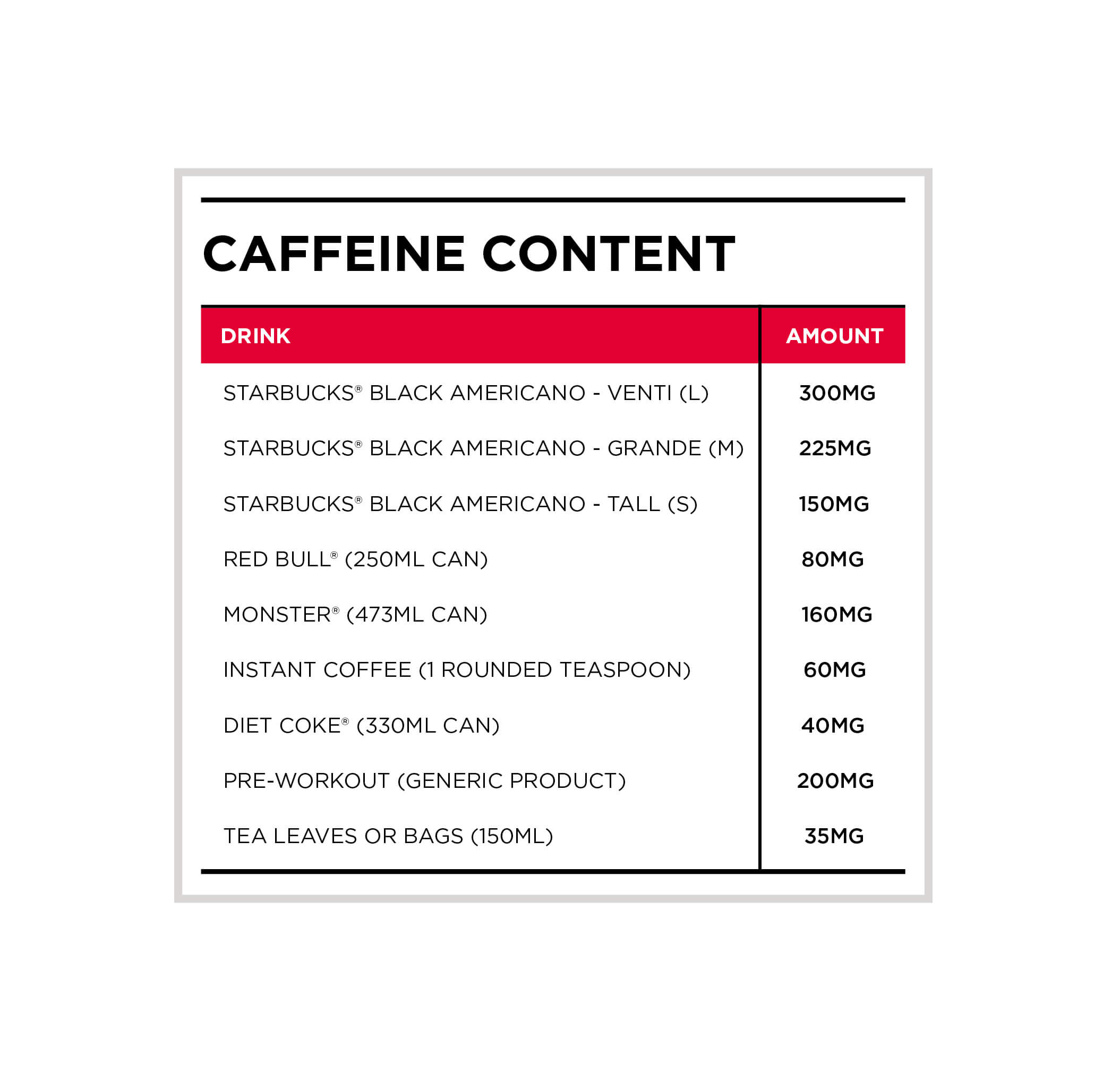
It is important to note that 400mg per day is a general guideline and people who are ‘hypersensitive’ to caffeine can experience negative symptoms from as little as 100mg per day.
When consumed in moderation, caffeine has the potential to improve your health, physical and mental performance. To get the maximum benefit from your caffeine intake we recommend:
- Use the minimum effective dose.
- Consider only using it when you really need a functional boost, e.g., before a long drive or challenging workout.
- Schedule regular caffeine breaks, e.g., caffeine-free weekends, holidays or every few weeks.
- Exercise regularly and eat healthily to boost your energy levels naturally, e.g., taking walks or having a piece of fruit rather than relying on caffeine.
- Avoid caffeine from the early afternoon (2-3 pm) onwards as it takes several hours to clear from your system.

Are diet sodas bad for me?
Artificial sweeteners are calorie-free chemical substances that food manufacturers use instead of sugar to sweeten foods and drinks. They are a key ingredient in diet sodas and have received a large amount of attention (both positive and negative) from researchers and in the media.
The primary concerns are that they may have adverse health effects and trigger sugar cravings that cause you to overeat. All artificial sweeteners undergo a rigorous safety assessment before manufacturers can include them in their products. There is also no evidence to suggest any long-term health risks from drinking diet soda.
Including diet sodas in your meal plan may help, rather than hinder fat loss, if it reduces your consumption of calorie-containing drinks like soda, fruit juices and alcohol.
However, be mindful that many diet sodas contain caffeine, which can be an issue if you consume it in excessive amounts.
You do not have to include diet sodas in your meal plan, but should not feel guilty about doing so in moderation either. However, excessive consumption of diet sodas (and low-calorie diet foods in general) can be a red flag for a negative relationship with food or an overly aggressive diet.

