It’s a well-known fact that it’s not a case of what, but how much you eat. How to measure foods is one of the key questions we hear from clients at Ultimate Performance. We’re here to break down the what, why and how of portion control and serving sizes.
Key takeaways
- Aim to meet your calorie target within +/-50 kCal and your protein target within a +/- 10g range.
- There is a difference between the gross (total) weight of a food and the amount of protein, fat and carbohydrate it contains per serving.
- Where foods do not have a reliable food label, use the U.P. app to search for the generic food items in our database, or search for a similar product from a trusted supplier.
- Always weigh foods before cooking and calculate serving sizes based on uncooked nutrition values.
- Use the weight listed on the packaging for meat, fruit and vegetables but always weigh portions when extracting servings from a bulk package.
- Use the U.P. app to help you calculate serving sizes for specific foods.
- Always use grams as the unit of measurement when weighing foods and recording them in the U.P. app.
Q1: Do I need to hit my nutrition targets to the gram?
Quick answer:
Aim to meet your calorie target within +/-50 kCal and your protein target within a +/- 10 g range. Do not worry if you miss your fat and carbohydrate targets.
Why?
Although you have calculated specific macronutrient targets, e.g., 155 g protein, 60 g fat and 100 g carbohydrate, it is important to realise that it is not always possible or expected to meet these to the gram.
Instead, think of each target as a range where a small amount of variation above or below your target is acceptable.
The human body is remarkably resilient, and you will not lose muscle or develop a nutrient deficiency if you deviate from your targets for one day. However, consistently missing your targets can cause problems.
The most important targets to aim for with a high degree of accuracy are your calorie and protein targets. Aim to meet your calorie target within a +/- 50 kCal range. For example, if your calorie target is 2,000 kCal, aim for between 1,950-2,050 kCal. Aim to meet your protein target within a +/- 10g range. For example, if your target is 150g, aim for between 140-160g.
If you meet your protein target but you are below your calorie target and do not feel hungry, you do not need to ‘eat up’ to your calorie target. If this happens consistently, it may be a sign that your calorie target is too high and needs adjusting. If the opposite happens and you meet your calorie target but are short on protein, do not eat extra calories to consume more protein.
Beyond the minimum amounts of dietary fat and carbohydrate, you need for optimal health and performance, how much you consume of each is mostly a matter of personal preference. Because of this, some people prefer to only track their calorie and protein intake. While this can work, we recommend setting specific fat and carbohydrate targets to help with planning. However, if you eat more carbohydrate and less fat on some days, or vice-versa, you don’t need to worry too much, provided you still meet your protein and calorie goals. 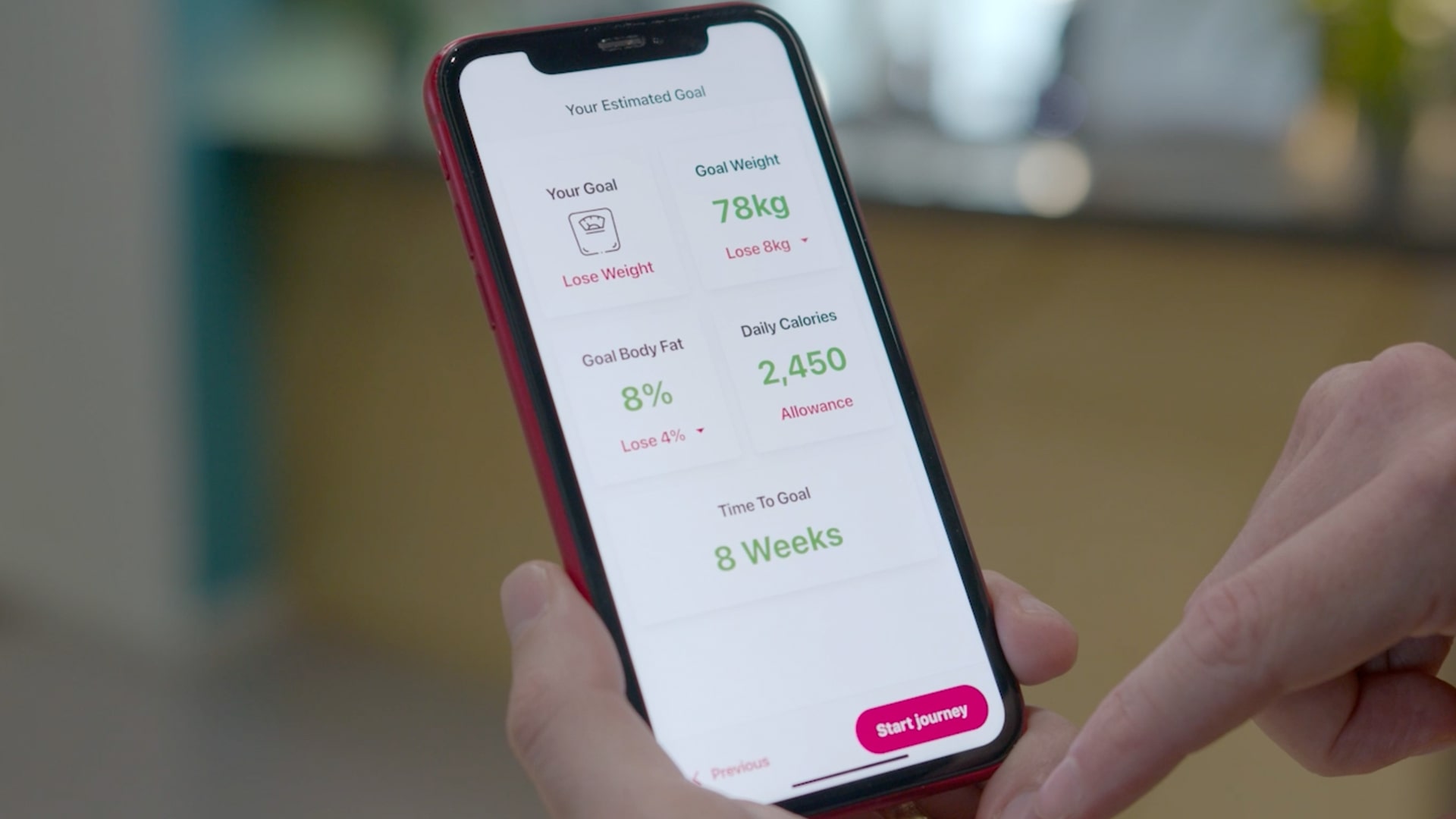
Q2: Does 100g of chicken equal 100g of protein?
Quick answer:
No. There is a difference between the gross (total) weight of a food and the amount of protein, fat and carbohydrate it contains per serving.
Why?
Although many people think of foods as being 100% protein, fat or carbohydrate, there are very few single macronutrient foods. Apart from certain confectionary items (which are pure carbohydrate) and oils (which are pure fat), most foods consist of at least two macronutrients.
For example, fatty protein sources like salmon contain both protein and fat. Almost all foods contain at least some water too, which also adds to the gross (total) weight. As a result, calculating serving sizes to meet a macronutrient target is not as straightforward as weighing a food you think of as being a good source of a specific macronutrient.
For example:
150g of chicken is not 150g of protein.
20g of almonds is not 20g of fat.
200g of rice is not 200g of carbohydrate.
The U.P. app takes the confusion out of the process as it provides a suggested option for each meal, along with the suggested serving size and calorie and macronutrient breakdown.
The app also provides you with a weekly shopping list, with values based on the recommended serving size for you. 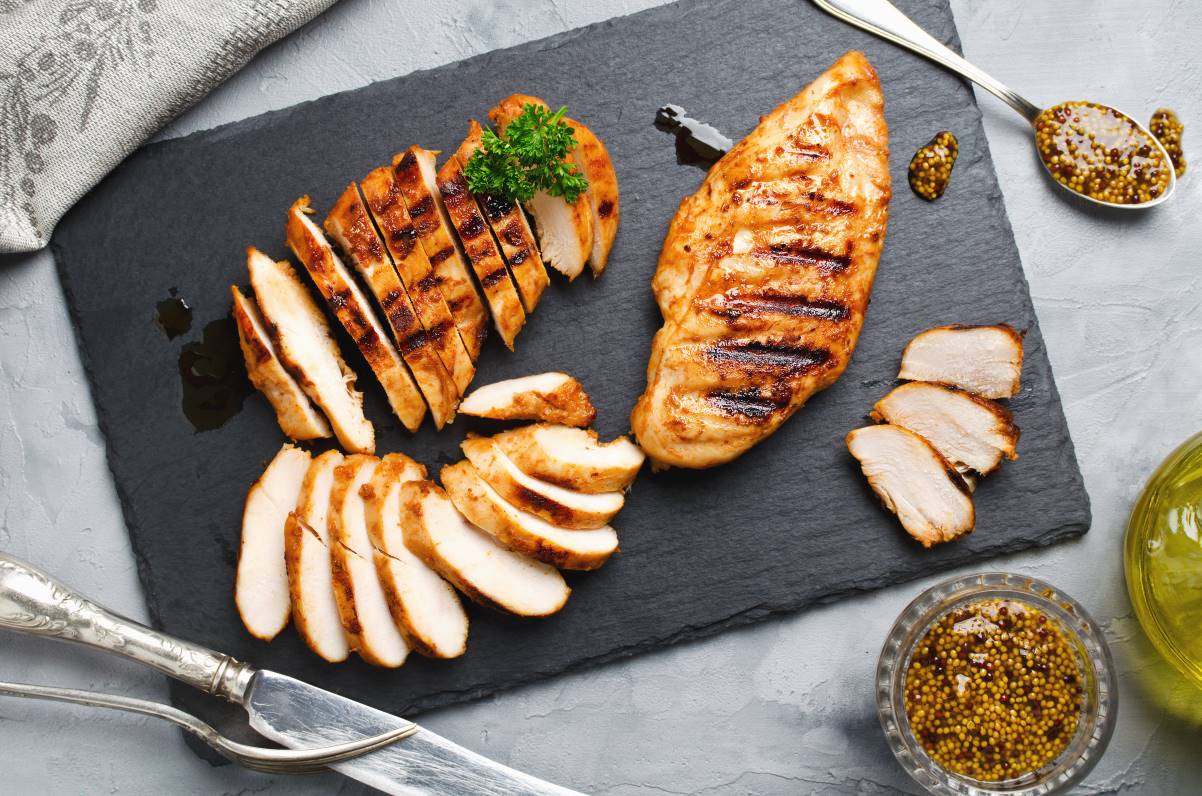
Q3: What if a food does not have a nutrition label?
Quick answer:
Use the U.P. app to search for the generic food items in our database or search for a similar product from a trusted supplier, e.g., supermarket, and use this nutritional information instead.
Why?
Not all foods will have nutrition labels. For example, if you buy meat from the butchers or vegetables from a market stall. In such cases, you can use the nutrition values for a similar product provided by a different (but trusted) supplier. For example, if you buy a sirloin steak from your local butcher, you can use the nutrition values for a packaged sirloin steak sold at a supermarket. You can find this information by searching the U.P. app and most supermarkets now have online stores you can search. 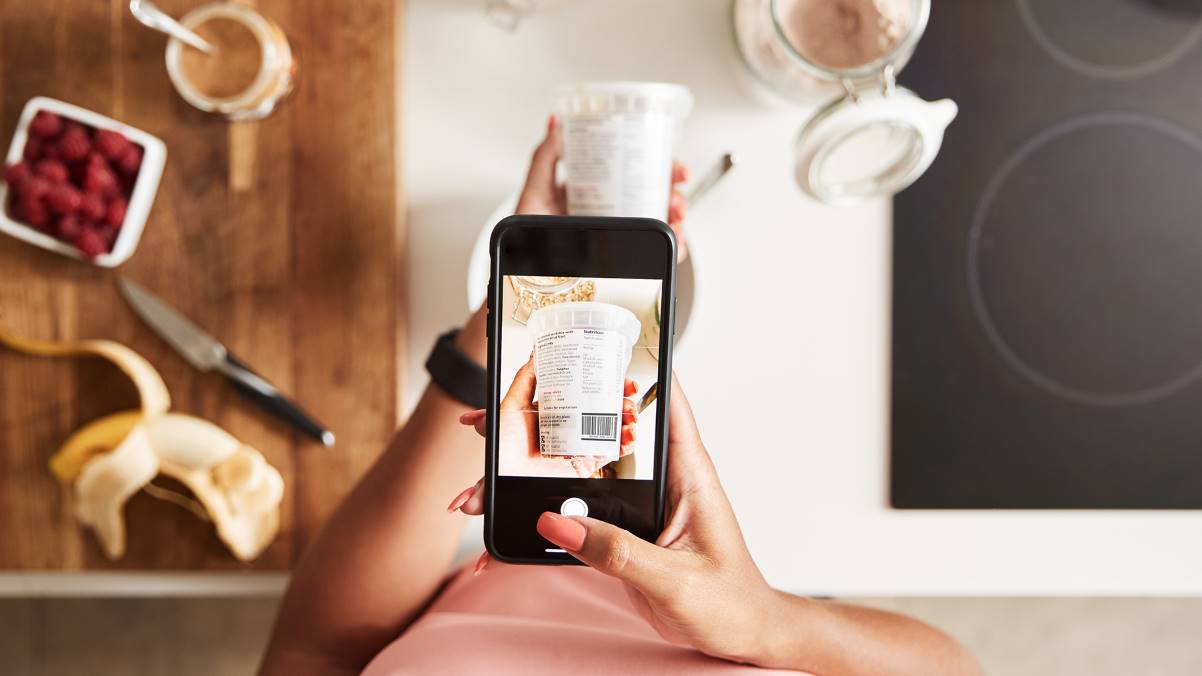
Q4: Should I weigh my food before or after cooking?
Quick answer:
Always weigh foods before cooking and calculate serving sizes based on uncooked nutrition values.
Why?
When reading nutrition labels, you will notice that they specify if the values provided apply to the food in a cooked or uncooked state. This is an important distinction, as changes in the fluid content of foods during the cooking process can have a big impact on the calorie and macronutrient content of a serving.
When cooking meat and fish, fluids are released, meaning that they weigh less when cooked. In contrast, starchy carbohydrates, such as rice and pasta, absorb water during the cooking process. The table below shows how 100 g of uncooked chicken breast contains fewer calories and less protein than an equivalent serving of cooked chicken breast, whereas the reverse is true for the calorie and carbohydrate content of cooked and uncooked basmati rice.
The difference between the calorie and macronutrient totals for cooked versus uncooked chicken (and lean protein sources in general) are relatively minor. However, confusing the cooked and uncooked values for starchy carbohydrates and fatty protein sources can have a much bigger impact on your total calorie intake. 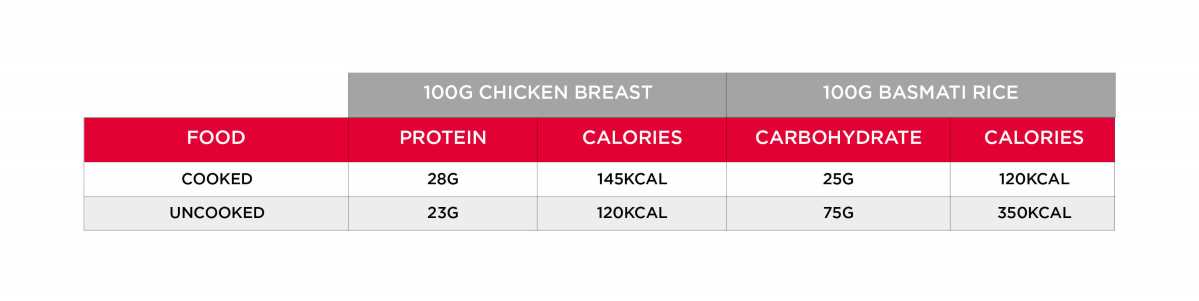
When selecting between the cooked and uncooked method it is important to consider:
- Nearly all nutrition labels now use the uncooked method.
- How long you cook foods will vary slightly each time and affect the cooked weight.
- Weighing individual components of mixed meals, e.g., stir-fries, after cooking can get very messy!
- It is a lot easier for certain cooked foods to get ‘lost’ on the way to the food scale and end up in your mouth.
As a result, we recommend weighing foods before cooking and calculating serving sizes based on the uncooked nutrition values. 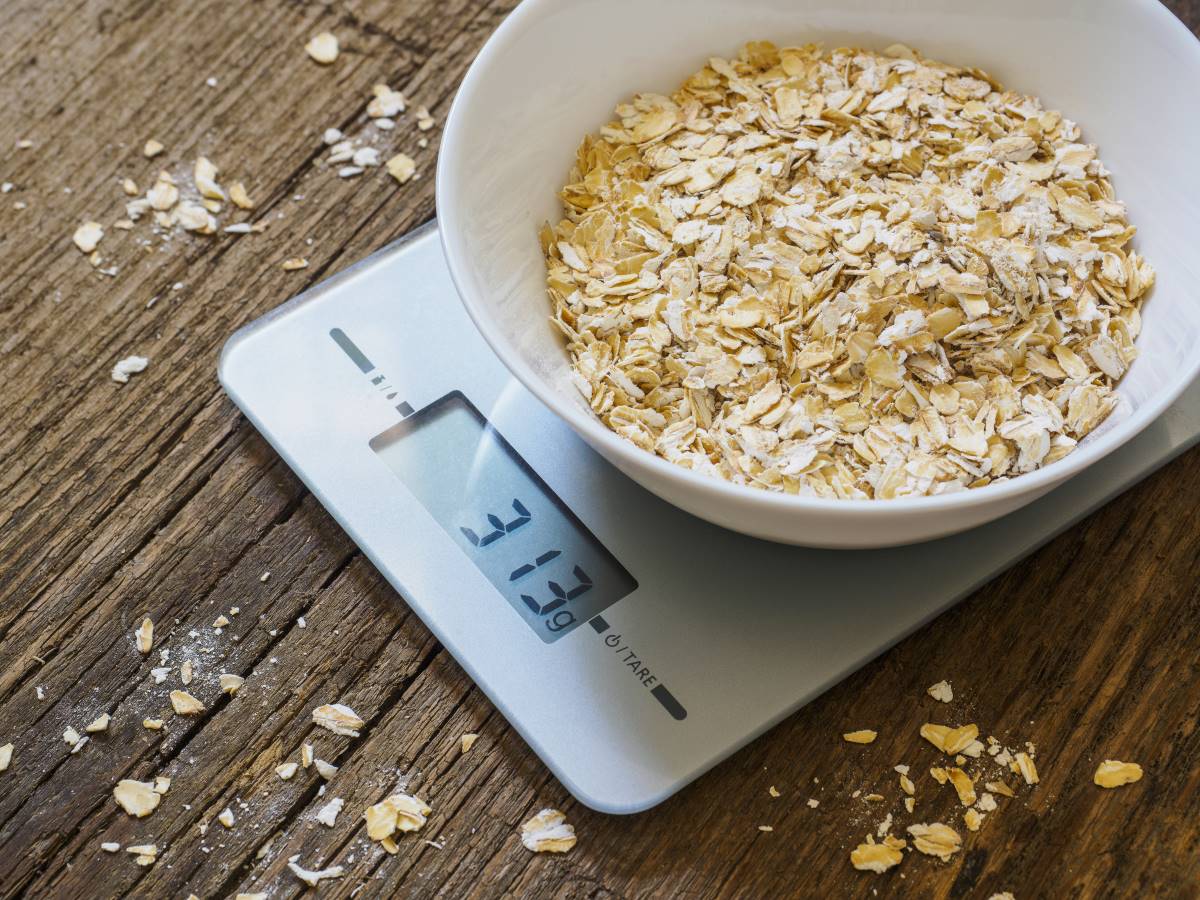
Q5: Do I need to weigh all my food?
Quick answer:
No. You can use the weight listed on the packaging for meat, fruit and vegetables. However, we recommend always weighing portions of fat sources when extracting servings from a bulk package, e.g., nuts from a tub or packet.
Why?
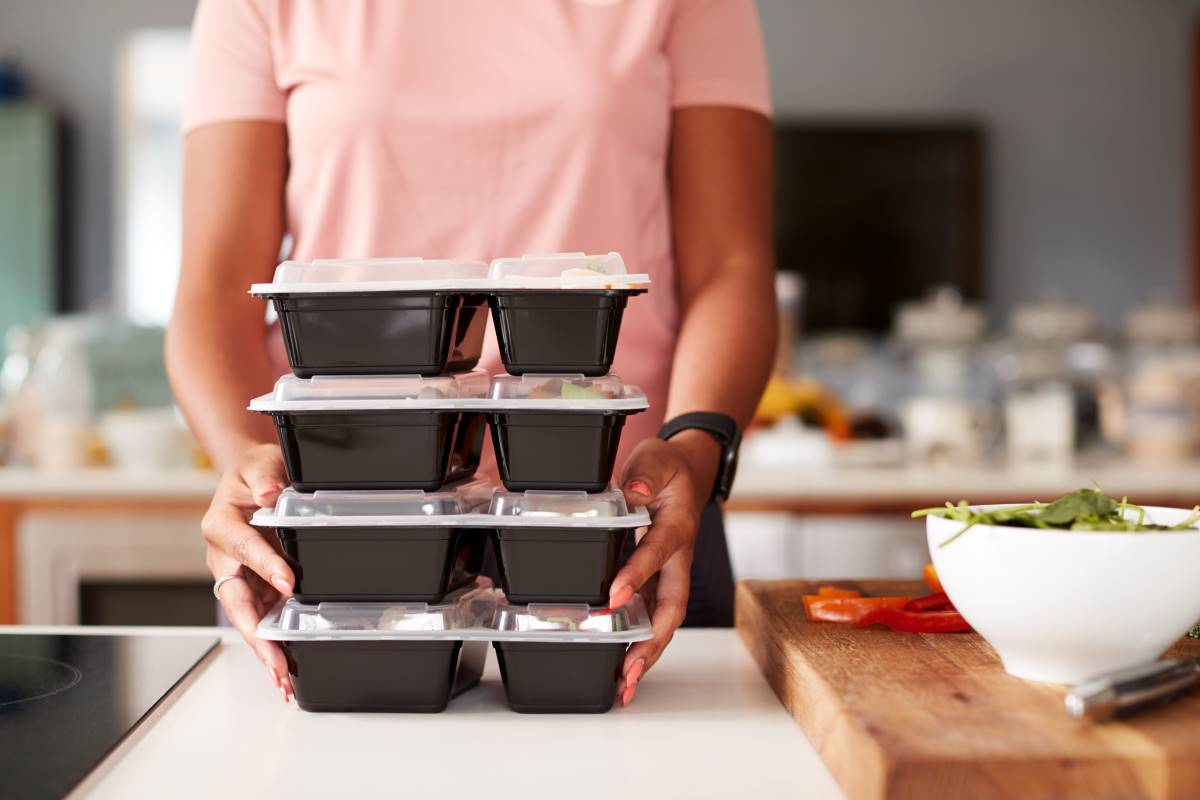
You do not need to weigh foods if the weight is listed on the packaging. Sometimes you will know the weight of a food, but only plan on eating part of it now and saving the rest for later. In such cases, make a note of the total weight, cook the food, and then ‘eyeball’ your serving size.
For example, if you decide to batch cook 400g of chicken breast for two meals, cook all the chicken and then roughly split it into two servings after cooking. This approach works well when batch-cooking fresh foods like meat, fruit and vegetables that you will eat relatively close together, for example, later in the same day or week. You may end up eating slightly more at one meal and less at another, but you will balance out any measurement error by the end of the day or week.
In contrast, we recommend taking a more measured approach when extracting servings of more calorie-dense foods like nuts, rice and pasta. Not many people have the self-control or precision to dip their hand into a bag of nuts and pull out the exact serving size required.
These foods also have longer shelf lives and often come in bulk packages. Although any measurement error will eventually balance out, this may take several weeks, or even months, and can cause you to overeat in the short term. 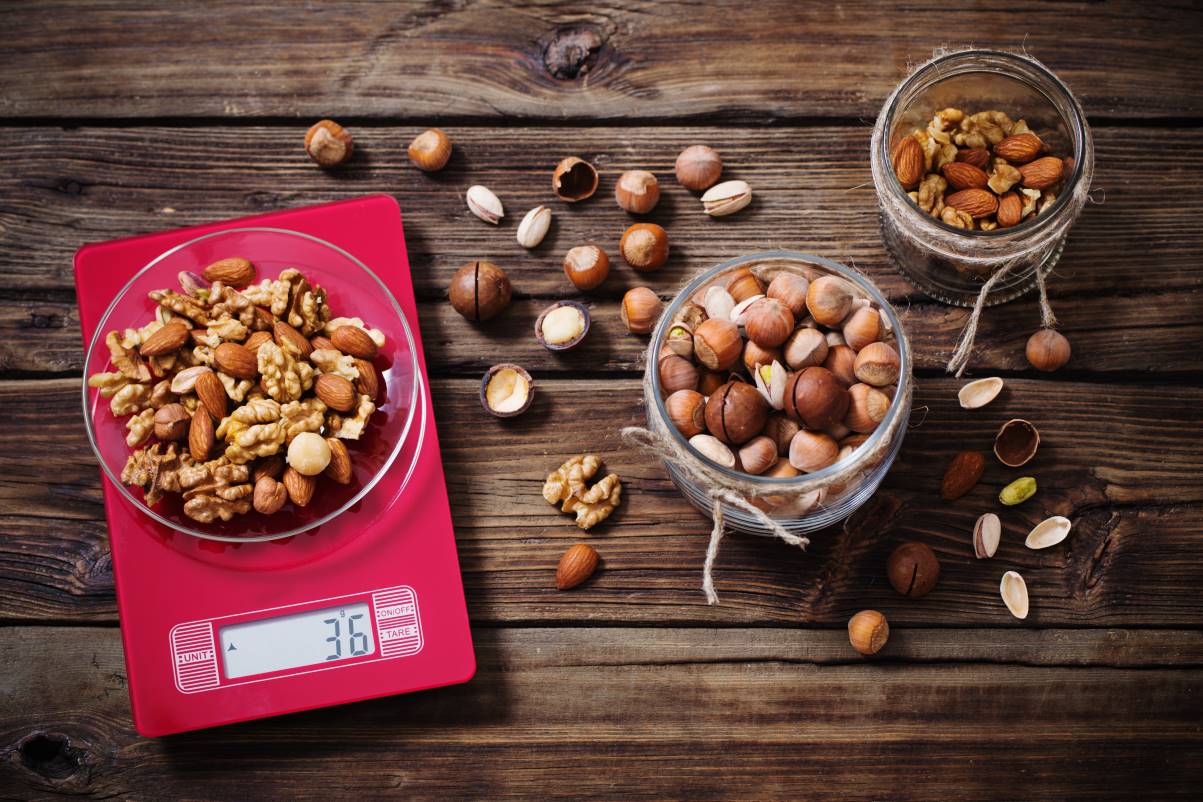
Q6: How can I calculate serving sizes myself?
Quick answer:
There is a simple calculation you can use to work out serving sizes, but we recommend letting the U.P. app do the maths for you!
Why?
You can manually calculate the amount of food you need to meet a specific macronutrient target using the following formula: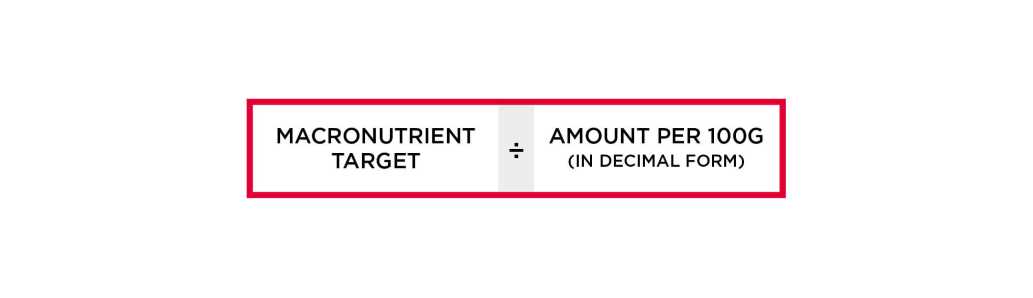
To convert the macronutrient content per 100 g into decimal form, you need to divide it by 100. For example, 25g of protein would be 0.25.
So, if you wanted to calculate how much chicken you needed to eat for 40 g of protein:
- Check the nutrition label to see how much protein chicken has per 100g of uncooked weight, e.g., 25g protein per 100g of uncooked weight.
- Complete the following calculation: 40 / 0.25 = 160g of uncooked chicken breast.
In reality, you will very rarely need to manually calculate serving sizes, as the U.P. app does the maths for you! 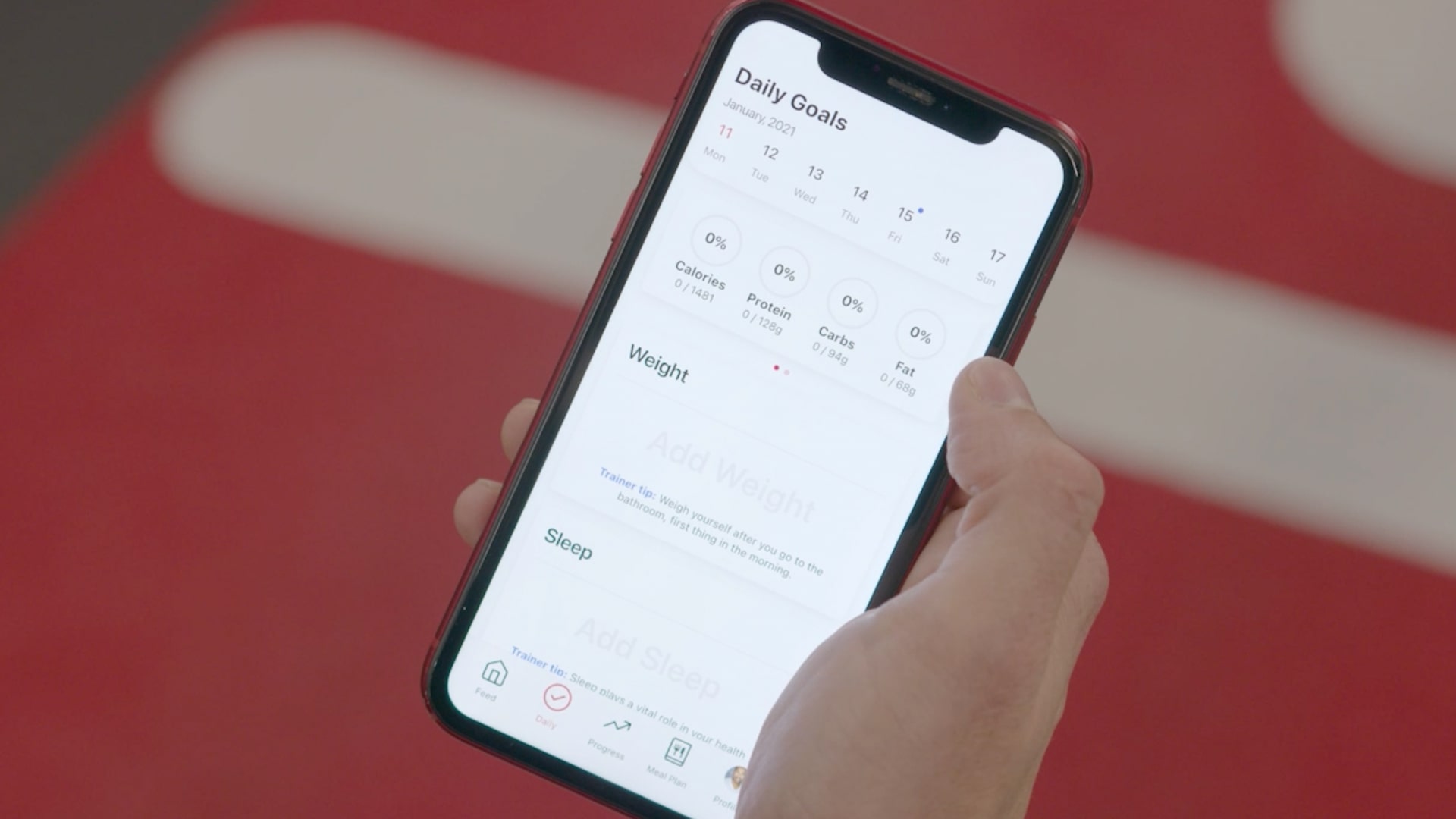
Q7: Can I use food volume to measure my food?
Quick answer:
No. Always use grams as the unit of measurement when weighing foods and recording them in the U.P. app.
Why?
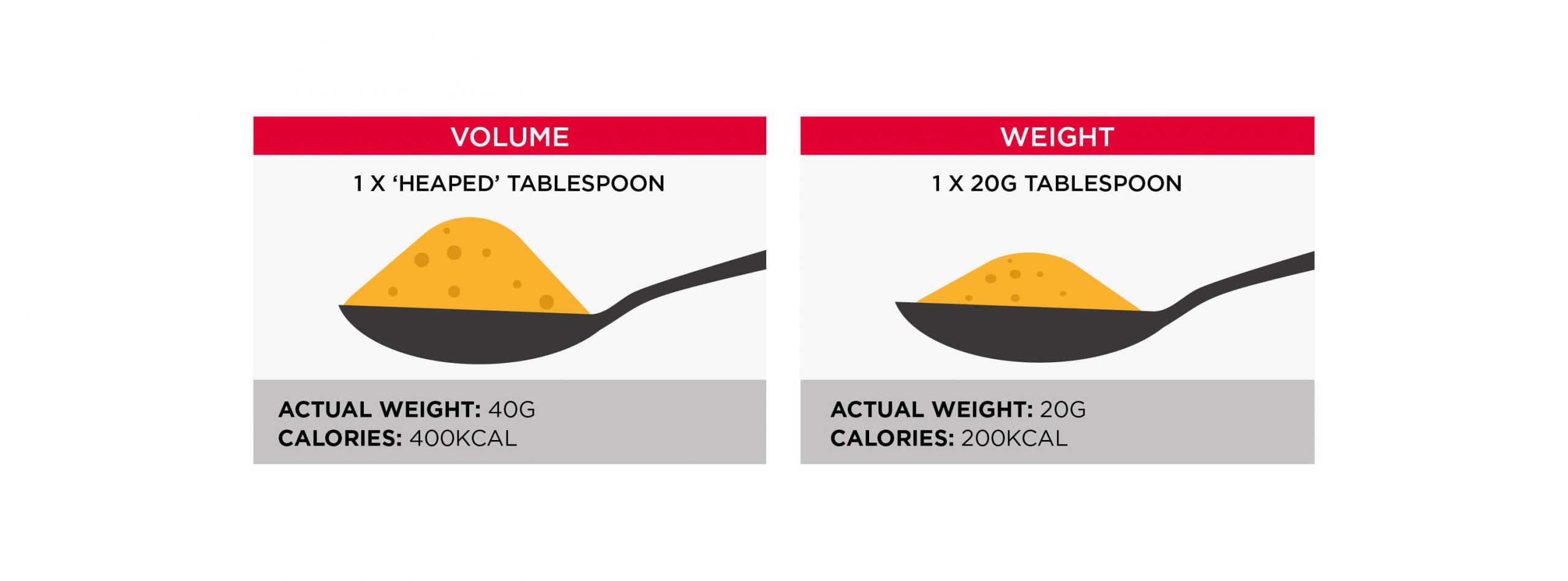
Most nutrition labels list serving sizes in terms of a standardised unit of volume, e.g., a cup or tablespoon, followed by the weight in grams. We recommend weighing your food wherever possible, as the volume-based method of measuring serving sizes can be very inconsistent.
One cup, tablespoon, scoop or any other measurement of volume can produce very different serving sizes (in terms of weight and therefore calorie content) depending on:
- The form of food, e.g., whole, chopped or mashed vegetables.
- How you pack the food into the measuring device.
- Individual variances in the size of measuring devices.
- The volume-based method is also prone to abuse with certain hyper-palatable foods and can lead to hidden calories sneaking into your diet.
For example, the image below shows how two tablespoons of almond nut butter can have vastly different calorie contents.
When logging your meals in the U.P. app, always select an entry that allows you to use grams as the unit of measurement (some entries are based on food volume, e.g., cups).
Certain entries will not have an option for grams. In such cases, select another option from the search results.