

Ever stepped on the scale after a few extra carbs and seen your weight spike? Or wondered why you gain a few pounds after a bad night’s sleep? It’s easy to feel frustrated when you see fluctuations in weight on the scale, but they are completely natural.
In the right context, scale weight can be a valuable progress tool that helps you rather than giving you a headache. Here’s everything you need to know about body weight measurements and how they fit into the bigger picture when it comes to achieving a transformation.
What a “Transformation” Means
There is no single definition of a transformation. Progress can take many forms and beyond amazing ‘before and after’ pictures, a transformation for you could mean improved sleep, greater energy, or simply being able to walk up the stairs without being in pain. However, for the purposes of this article, we will define a transformation as ‘a remarkable change in body composition (body fat/muscle) typically achieved in a short timeframe (e.g. 12-20 weeks)’.
Transformations Don’t Happen by Accident
Achieving a transformation requires increasing your awareness. The two main forms of awareness are:
1.Dietary awareness
This means an understanding of how your nutrition habits affect your body composition over days, weeks, months and years.
- What is your average calorie intake?
- Does your average intake cause you to gain, lose or maintain weight?
- Do you know the calorie contents of different foods?
- What foods are you intolerant to?
2. Lifestyle Awareness
This means an understanding of how your behavioural habits affect your body composition over days, weeks, months and years.
- Do you lead an active or sedentary life?
- How much quality sleep do you get per night?
- What causes your energy and mood to fluctuate, and to what extent?
There are several basic principles to which you must adhere in order to improve body composition. If you lack dietary/lifestyle awareness, then it is very easy to disregard these factors and, over time, find yourself out of shape.

Specificity
The unavoidable truth is that transformations require a level of specificity that would be deemed unusual to the general population. This may include recording and tracking your weight daily or weighing and tracking your food.
Adopting a high level of specificity reduces the margin of error. It shows what is working, what isn’t working and whether you need to make changes. The greater the degree of specificity, the more data you have and the more accurate you can be in your approach.
The graphic below shows the timeline of a transformation in terms of awareness, specificity and sustainability.
The Transformation Timeline
- You start your transformation because you want to improve your body composition.
- You make specific changes to your dietary and lifestyle habits to achieve a transformation.
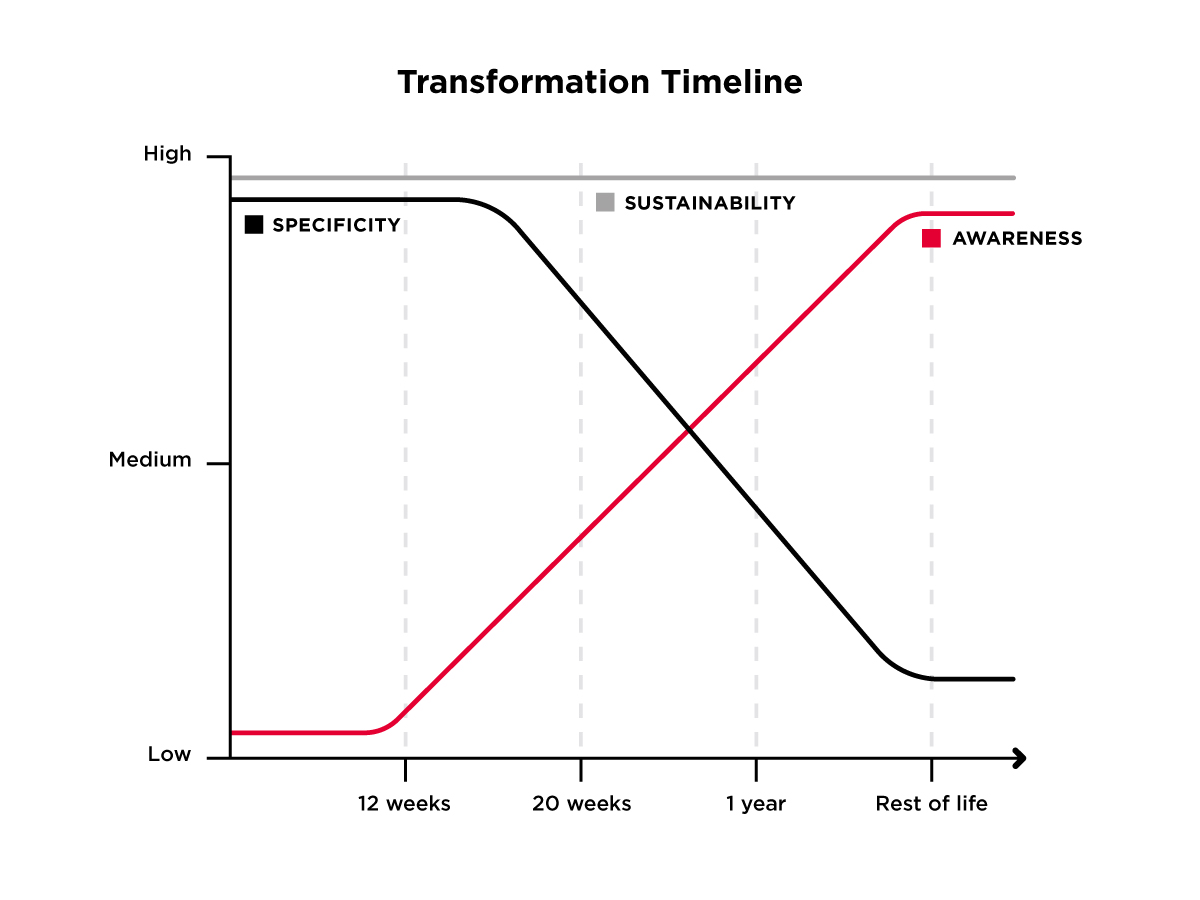
Highly specific approaches can be sustained for short periods of time, but not indefinitely. Nobody is a robot. As a result, it is important to tailor the level of specificity to your goal at that moment in time. For example:
- Are you at a loss for why you cannot get in shape? Be more specific.
- Are you aiming to dramatically improve body composition in the shortest timeframe possible? Be more specific.
- Have you achieved a transformation and want to focus on maintaining your results? Lower your specificity.
- Are you really busy and just want to use training as an outlet? Lower your specificity.
Selecting an inappropriate level of specificity relative to your goal leaves you destined for failure.

Why Do We Use Scale Weight?
Scale weight tends to be the most popular progress-measuring tool. This is because it is readily available and relatively easy to use, unlike more advanced and less accessible body composition tracking methods, such as DEXA scan or calliper measurements.
Body weight measurements can be highly beneficial for achieving and maintaining health and fitness goals. In fact, research into people who lose significant amounts of weight and maintain their results shows that regular self-weighing is a common trait of successi.
However, scale weight is also incredibly misunderstood because it only shows us how much we have lost, gained or maintained, not what that weight comprises of.
Your body weight includes everything physically contained in your body: muscle, bone, organs, tissues, water, the food you ate last night, and so on. Therefore, it can only ever offer a very crude representation of your current status. And it can’t tell you whether that lost weight is from fat alone, or from water, muscle tissue or anything else.
It is a fact that any fat loss diet also includes a degree of weight loss. Rates of muscle gain and fat loss are vastly different (especially in women), so it’s incredibly unlikely that you’d ever achieve body recomposition without the number on the scale dropping. But the difference is that it is a proxy of progress, not the end goal. This is why scale weight is just one tool in the box for measuring progress, alongside progress photos, calliper readings (if available), and circumference measurements.
What Causes Bodyweight Fluctuations?
Believe it or not, it is completely normal for body weight to fluctuate between 1-3% each day, regardless of changes to body composition. We’ve all been there: you had a bad day of eating, or you slept badly. Your weight has increased by a kilo, and now you’re panicking.
But let’s put this into context: to have gained an additional kilo purely from body fat, you would need to have eaten 7,700 calories in addition to your maintenance calories. That equates to an excessive 14 Big Macs. If that didn’t happen, you can be pretty certain you didn’t gain fat. Instead, the cause is likely to include one or more of the factors below:
1. You ate some high-calorie foods last night
Calorie-dense foods often contain high amounts of sodium, which can increase the body’s fluid stores. So, if you went out to your favourite pizza place last night, don’t panic if your scale weight spiked today.
2. You ate some extra carbs yesterday
When you eat carbohydrates, your body breaks them down into glycogen which it shuttles to muscle cells along with water, causing your weight to increase slightly. However, this is a perfectly natural and necessary process and doesn’t mean you aren’t losing body fat.
3. You didn’t drink enough water yesterday
Up to 60% of the adult human body is water, so if you’re dehydrated, it’s no wonder your body is trying to hold onto some of it. Offset this by hitting a daily hydration goal: for most people, a minimum intake of three litres per day is a good place to start.
4. You’re stressed, or you slept badly last night
Chronic stress and disrupted sleep increase the production of the stress hormone cortisol, triggering water retention. Schedule time in your week to journal, meditate or book a pamper session. You can also improve your sleep quality and quantity by practising good sleep hygiene, such as avoiding blue light-emitting devices in the hour before bed.
5. Menstrual cycle changes
In the run-up to the menstrual cycle, a woman’s body weight may spike due to increased circulating levels of the hormone aldosterone, which controls sodium and fluid levels. However, try and look at the number on the scale as simply data; by tracking it consistently, you can spot trends and make predictions for next month, so you won’t freak out when the numbers start to creep up.
6. You’re constipated, or you’re experiencing gut irritation
If you’ve noticed changes to your digestion recently, such as being constipated, it’s not surprising if the scale shows a slightly higher number. Equally, if you’re experiencing a gut flare-up, there’s likely to be some inflammation and water retention. In either case, focus on increasing your fibre intake, minimising inflammatory foods, and drinking plenty of water. Once things start moving as usual again, your weight will go back down.
Unfortunately, it’s also possible that your weight will fluctuate for apparently no good reason! This is yet another reason why we look at averages over time rather than single readings.
How Can You Stop Feeling So Hung-Up On Scale Weight?
If you’ve ever found yourself obsessing over your morning weight, daily fluctuations can prove frustrating and confusing.
We generally recommend that you take a minimum of three and a maximum of seven body weight readings per week to account for natural fluctuations on the scale. When you only take one reading per week, these natural ups-and-downs could cause you to feel stressed, worried and anxious when the scale seemingly shows zero progress. Remember, the greater the level of specificity, the more easily you can tell if your approach is correct.
However, it’s important to remember that the scale can only ever give you a snapshot of what your body weighed on that day. Therefore, it’s crucial to take body weight readings under the same conditions every time and focus on average data. You can then take an average across the week to account for fluctuations. Ideally, record your weight first thing upon waking, after going to the bathroom and before food and drink.
However, there may be some instances in which taking body weight measurements every day is not beneficial. If you find you are struggling psychologically with the number on the scale, or frequently experiencing negative self-talk as a result, here’s what you can do:
1. Ask someone else to take your readings for you and face away from the scale as you do so
If you have someone else who can take your readings under consistent conditions, this will allow you to maintain the same level of specificity while maintaining accuracy.
2. Take readings fewer times per week (reducing specificity)
Reducing the number of times you record your weight each week may help you feel less caught up with the number on the scale. However, the trade-off is that reduced specificity means it may be more challenging to tell if your approach is effective.
3. Use circumference measurements (reducing specificity)
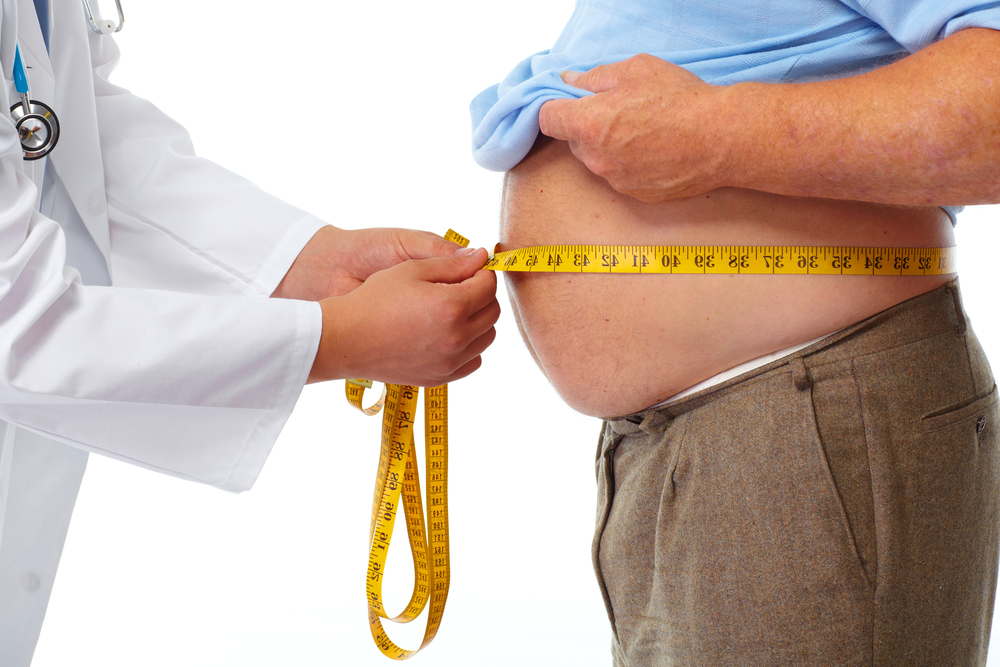
Circumference measurements are a valuable progress tool that may be difficult in addition to or instead of body weight measurements. However, it’s important to note that they take far longer to show changes compared to bodyweight readings. As a result, it could mean you may lose time if you don’t know that you need to make a change.
4. Use progress photos (reducing specificity)
Progress photos are a tool we use to assess visual change. Of course, photographs are subjective, and they cannot always give a reliable indication of whether a change is occurring week on week. However, they are the single biggest indicator of change when taken over a longer period. Progress photos are the measurement tool that probably take the longest to show change. When you use photos to gauge progress, make sure to stitch the images together so that you can directly compare the change. This allows you to spot subtle differences in your progress that may not be apparent from memory alone.
5. Consider all factors before you allow yourself to become too stressed out
Weight loss plateaus are much rarer than you’d think, and, most of the time, improving your adherence to the nutrition and training plan will resolve a weight stall. If your weight isn’t budging, ask yourself:
- Did you sleep badly or feel more stressed than usual this week?
- Did you eat different foods or drink less water than usual?
- Did your activity levels drop?
- Are you expecting your period?
Compare this against other progress measurement tools, such as progress pictures and circumference measurements. If it’s just your weight that’s not moving, stay patient because a drop will happen. If other measures show that progress is stalling, you may need to consider making a change, such as decreasing calories slightly or upping your activity levels.
The Bigger Picture
Bodyweight measurements undoubtedly have some flaws, and they certainly shouldn’t be the be-all-and-end-all of your progress – and certainly not your self-worth! However, if you take them for what they are, which is simply one measure of progress, there’s no reason they can’t be an incredibly useful tool. If you are struggling psychologically with your progress, scaling back your level of specificity may improve things. However, be mindful that the more you decrease your level of specificity, the more difficult it is to assess progress.
Key Takeaways
- Scale weight is an easy-to-use and readily available progress marker, but like any tool, it comes with some inherent flaws.
- Scale weight is a proxy rather than a direct measure of fat loss; it tells us how much rather than what we have lost, gained or maintained.
- Scale weight is just one tool in the box to measure progress, alongside progress photos and body composition testing.
- There is an important differentiation between weight loss and fat loss. If your goal is a more ‘toned’, defined look, improving your body composition through fat loss should be your primary focus.
- Obsessing over the number on the scale is not only unlikely to lead you to your goal, it could also result in unhealthy behaviours.
- Carbohydrate intake, sleep, stress, hydration levels and menstrual cycle all impact the number on the scale.
- If you struggle psychologically with scale measurements, decrease your level of specificity. However, be mindful that this may make it harder to assess progress or whether you need to make a change.

