


Most people don’t fail to lose fat because they lack willpower. They fail because their diet is set up to work against them – and it often starts with the first meal of the day.
Breakfast is where most people go wrong. Low protein, high calories, and foods that do little to control hunger make the rest of the day harder than it needs to be. Get this one decision right, and everything that follows becomes easier.
Start your day with enough protein, and you’ll improve appetite control, make a calorie deficit more sustainable, and protect lean muscle as you diet. [4]
After working with over 25,000 personal training clients at Ultimate Performance, one principle shows up consistently: whatever your goal, your first meal should be built around protein (and every meal after that).
This article keeps things practical – exactly how much protein to aim for, and seven high-protein breakfasts you can use immediately to make fat loss more consistent and predictable.
Why protein at breakfast matters when dieting
In a calorie deficit, the goal is not simply “lose weight”. The goal is lose fat while keeping muscle. That only happens when training is in place and protein intake is high enough to support muscle retention. [4]
Protein also makes dieting more controllable. Higher-protein breakfasts have been shown to improve appetite control and reduce later snacking in controlled research settings. [5] [6]
Finally, breakfast protein helps solve a common modern pattern: too little protein early, then trying to “catch up” at dinner. More even distribution across meals is associated with stronger muscle protein synthesis over 24 hours compared with heavily skewed intake. [3]
Appetite control
Higher protein intakes increase satiety hormones and reduce hunger later in the day [5]. This improves adherence to a calorie deficit.
Blood sugar stability
Protein slows gastric emptying and moderates glucose response compared to high-carb breakfasts. This reduces mid-morning crashes and reactive cravings.
Energy and cognitive clarity
Stable glucose and adequate amino acids support neurotransmitter production and mental focus – critical for high-performing professionals.
Muscle retention
During energy restriction, higher protein intake preserves lean body mass [1] [4] [8]. Lean mass preservation helps maintain metabolic rate.

How much protein should your breakfast contain?
A clear benchmark for most people on a fat loss diet is 0.3–0.5g of protein per kg bodyweight at breakfast. [3]
This lands most people in the practical range of 25–45g protein, depending on your daily protein targets, and how many meals you have per day to divide your protein between.
But a good rule of thumb at breakfast is consume between 30-40g of protein to start the day.
Overall daily protein still matters more than any single meal. A strong evidence-based starting point for active people is often around 1.6g per kg each day, with higher intakes commonly used during dieting phases alongside resistance training. [2]
7 high-protein breakfasts for fat loss
Macros below are practical estimates and will vary by brand and portion size. Where possible, the numbers are built from standard nutrition databases.
1. Steak and greens breakfast
Calories – 415 kcal | Protein 39g | Carbs 15g | Fat 23g
Ingredients: 150g fillet steak, 100g green beans. 100g spinach, 10g almonds.
Why it works for fat loss: it is high in protein, low in ultra-processed carbs, and it is hard to overeat when the plate is built around protein and vegetables. [4]
Who it suits: it is ideal for anyone who prefers a substantial and savoury breakfast to help keep energy stable throughout the morning and hunger controlled until lunch.
Common mistake: turning a lean, high-protein plate into a calorie bomb with so-called “healthy extras” – large handfuls of nuts, oils, or sauces.
Smart swaps: if red meat intake is already high across the week, rotate in eggs, yoghurt, tofu, or fish to keep variety in your diet.
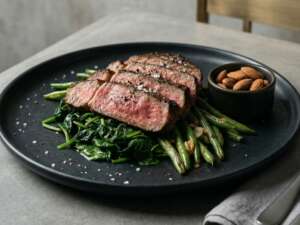
Try these Steak and Peanut Butter Skewers, for a tasty and convenient way to eat meat and nut for breakfast. Get the recipe here…
2. Whey isolate and nut butter ‘quick fix’
Calories – 205 kcal | Protein 28g | Carbs 4g | Fat 9g
Ingredients: 1 scoop whey isolate (30g), 1 tbsp almond butter (15g).
Why it works for fat loss: Quick, easy, and effective. You get a solid portion of protein with almost no effort, which is exactly what you need on busy mornings or when your appetite is low.
Who it suits: Early starters, frequent travellers, or anyone who trains early and cannot stomach a large meal.
Common mistake: Adding multiple calorie extras like full-fat milk, oats, bananas, extra nut butter, without noticing breakfast has quietly become 600+ kcal.
Smart swaps: If this is your only breakfast, aim to push protein closer to 30–40g by adding an extra half scoop or pairing it with something simple like Greek yoghurt. If calories need to stay tight, keep it as-is and use it as a lower-calorie option within your day.
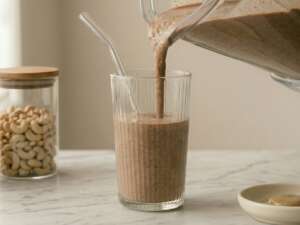
You could also try this protein and nut butter mocha shake, incorporating your morning coffee into this tasty recipe. Get the recipe here…
3. Eggs and smoked salmon
Calories – 361 kcal | Protein 40g | Carbs 5g | Fat 19g
Ingredients: 3 whole eggs, 50–70g smoked salmon, 100g spinach or mushrooms.
Why it works for fat loss: This meal is high protein, very filling, and easy to keep consistent. It’s a simple structure that works – protein plus vegetables, nothing overcomplicated. [5]
Who it suits: People who want a “proper breakfast” that still fits a fat loss phase.
Common mistake: Defaulting to smoked proteins daily. Smoked salmon is high in sodium, so it works best as a rotation, not a staple.
Smart swaps: Switch smoked salmon to fresh salmon, tuna, or leftover lean meat when sodium needs to come down.
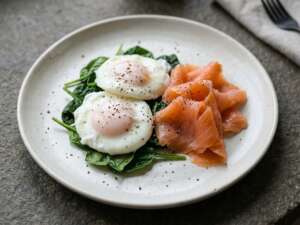
Try this delicious Pizza Omelette recipe for something a little different at breakfast time.
4. Greek yoghurt bowl
Calories – 330 kcal | Protein 48g | Carbs 14g | Fat 9g
Ingredients: 200g 0% Greek yoghurt, 1 scoop whey isolate, 1 tbsp almond butter.
Why it works for fat loss: It is one of the easiest ways to hit 30g+ protein without cooking, and it can be tailored up or down depending on calorie targets. [1]
Who it suits: Anyone with a sweet tooth in the morning who still wants control over their nutrition to hit macronutrient targets.
Common mistake: Buying flavoured “high-protein” pots that quietly add sugar and calories, then adding calorie-dense granola on top.
Smart swaps: If you don’t want whey, increase the yoghurt portion or use cottage cheese or skyr instead.
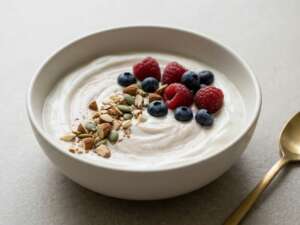
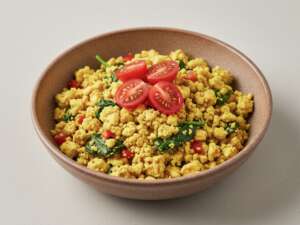
5. Vegan tofu scramble
Calories – 350 kcal | Protein 35g | Carbs 25g | Fat 18g
Ingredients: 250g firm tofu cooked, 50g pepper, 100g mushrooms, 100g spinach, 50g tomato and spices (turmeric, chilli, black pepper).
Why it works for fat loss: It keeps breakfast high in protein and fibre-rich vegetables, without relying on vegan processed substitutes.
Who it suits: Anyone following a plant-based diet who still wants a proper, savoury breakfast.
Common mistake: Not using enough tofu. Many plant-based breakfasts look good on paper but fall short on protein, which usually leads to hunger later..
Smart swaps: If you struggle to hit 30g+, increase tofu towards the higher end of the range or add a side of soy yoghurt or a scoop of vegan protein.
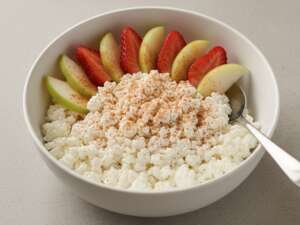
6. Cottage cheese bowl
Calories – 310 kcal | Protein 35g | Carbs 29g | Fat 6g
Ingredients: 250g low‑fat cottage cheese, 150g berries or sliced apple and cinnamon. (Add a half scoop of whey only if daily protein is consistently short.)
Why it works for fat loss: Cottage cheese is high protein for the calories, so it is an efficient way to hit breakfast protein targets without pushing total intake over budget.
Who it suits: People who do not want eggs every day and prefer whole-food protein over shakes.
Common mistake: Pairing cottage cheese with large servings of granola or nut butter, then wondering why fat loss has stopped.
Smart swaps: Sodium varies a lot by brand, so label checks matter if sodium intake is a concern.
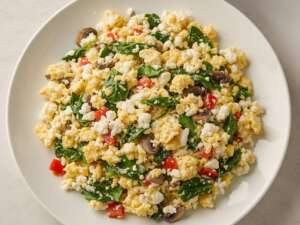
7. High-protein egg white scramble
Calories – 342kcal | Protein 45g | Carbs 22g | Fat 8g
Ingedients: 200g egg whites + 1 whole egg, 100g low‑fat cottage cheese, cooked with spinach, mushrooms, peppers, and herbs.
Why it works for fat loss: This is about increasing protein without pushing calories up too high at the same time. Exactly what you want when you’re dieting and trying to hold onto muscle.
Who it suits: Anyone who is dieting on tighter calories and wants a large, satisfying plate.
Common mistake: Cooking everything in “free-poured” oil, which can add significant calories that are unaccounted for. Even a disciplined breakfast collapses if fat sources like oils are unmeasured.
Smart swaps: If you don’t tolerate dairy, drop the cottage cheese, increase egg whites, and add more vegetables for volume.
High-protein breakfasts for busy professionals
Even the best-laid breakfast plan will crumble if you are trying to achieve perfection every morning. Your breakfast meal routine has to fit around all the things that crop up in life – meetings, travel, school runs, and early training sessions. So you need to be flexible and have a number of different options in your fridge ready to go. Some of the recipes above will help – make them staples in your diet plan.
For five-minute execution, keep two defaults available at all times: a high-protein dairy base (Greek yoghurt, skyr, or cottage cheese) and a fast protein top-up (whey isolate or pre-cooked eggs).
For meal prep, the best approach is not complicated recipes – it is repeating one efficient template for 2–3 weekdays, then rotating. Protein distribution across the day is a consistent lever for muscle retention, so breakfast needs to do its share. [3]
What to avoid at breakfast when trying to lose fat
When it comes to eating breakfasts that support consistent fat loss, we see people fail for a number of predictable but avoidable reasons.
It’s normally down to the fact that calories are too high, they’re not getting enough protein, or the composition of their meals isn’t keeping a lid on hunger between meals.
These three patterns cause most of the damage:
First – breakfast is effectively a dessert – pastries, sugary cereal, granola-heavy bowls. Protein is too low to stabilise blood sugar levels and appetite, so snacking becomes a second breakfast.
Second – “healthy” fats are unmeasured – nut butters, oils, nuts. These foods have a place, but they need portion control or breakfast overshoots calorie targets without looking big.
Third – processed breakfast proteins become daily staples – bacon, sausages, smoked fish. They are often higher in calories, they’re highly processed, and they’re often full of things like salt.
Frequently asked questions
Is porridge good for fat loss?
Porridge can fit into a fat loss program – so long as portions are controlled, it fits with your calorie targets, and it includes a good portion of protein. When oats are eaten alone, breakfast often becomes carb-dominant, and protein lands too low for appetite control. A simple fix is “proats” – oats plus a protein source such as whey or high-protein yoghurt.
Can breakfast be skipped and still lose fat?
Yes. Fat loss still comes down to total calorie intake over time, and research does not support breakfast as a guaranteed weight-loss advantage in isolation. [7]
For a full decision framework (who should eat breakfast, who can skip it, and how to do either well), this is covered in “The U.P. philosophy on breakfast for body composition”.
Is a protein shake enough for breakfast?
It can be – especially if you struggle with appetite in the morning or need something quick and easy. A shake is one of the fastest ways to get 25–35g of protein in without much effort.
Where they fall down is satiety. Liquid calories don’t tend to keep you as full as whole food, so if you regularly find yourself hungry again well before lunch, a shake on its own may not be the best option.
A simple fix is to add some volume and fibre alongside it – berries, fruit, or even a small portion of vegetables. Or, if hunger is an issue, switch to a more solid, protein-based breakfast built around whole foods.
The key is not just hitting your protein target, but choosing a breakfast you can stick to without battling hunger a few hours later.
How many calories should breakfast contain in a fat loss phase?
There is no universal number. The working range for many professionals is roughly 250–500 kcal, depending on body size, daily activity and total calorie target. The non-negotiable is that protein stays high enough to help you stabilise blood sugar, preserve muscle, and make dieting feel easier and more sustainable.
Final thoughts
A high-protein breakfast for fat loss is a practical tool. It reduces decision fatigue, improves appetite control, and helps contribute to hitting your daily protein requirements – important to help preserve muscle in a calorie deficit.
Pick two options from the list that are genuinely enjoyable, make them repeatable on workdays, and keep the “healthy extras” measured. Results come from precision done consistently, not perfection done occasionally.
References
- Longland, T.M., Oikawa, S.Y., Mitchell, C.J., Devries,M.C. and Phillips, S.M. (2016).
Higher compared with lower dietary protein during an energy deficit combined with intense exercise promotes greater lean mass gain and fat mass loss.
American Journal of Clinical Nutrition, 103(3), pp.738–746.
https://pubmed.ncbi.nlm.nih.gov/26817506/
- Morton, R.W., Murphy, K.T., McKellar, S.R., Schoenfeld, B.J.,Henselmans, M., Helms, E., Aragon, A.A., Devries, M.C., Banfield, L., Krieger, J.W. and Phillips, S.M. (2018). A systematic review, meta-analysis and meta-regression of the effect of protein supplementation on resistance training–induced gains in muscle mass and strength.
British Journal of Sports Medicine, 52(6), pp.376–384.
https://pubmed.ncbi.nlm.nih.gov/28698222/
- Mamerow, M.M., Mettler, J.A., English, K.L., Casperson, S.L., Arentson-Lantz, E., Sheffield-Moore, M., Layman, D.K. and Paddon-Jones, D. (2014).
Dietary protein distribution positively influences 24-h muscle protein synthesis in healthy adults. Journal of Nutrition, 144(6), pp.876–880.
https://pubmed.ncbi.nlm.nih.gov/24477298/
- Helms, E.R., Zinn, C., Rowlands,D.S. and Brown, S.R. (2014). A systematic review of dietary protein during caloric restriction in resistance trained lean athletes: a case for higher intakes. International Journal of Sport Nutrition and Exercise Metabolism, 24(2), pp.127–138.
https://pubmed.ncbi.nlm.nih.gov/24092765/ - Leidy, H.J., Clifton, P.M., Astrup, A., Wycherley, T.P.,Westerterp-Plantenga, M.S., Luscombe-Marsh, N.D., Woods, S.C. and Mattes, R.D. (2015). The role of protein in weight loss and maintenance. American Journal of Clinical Nutrition, 101(6), pp.1320S–1329S.
https://pubmed.ncbi.nlm.nih.gov/25926512/
- Weigle, D.S., Breen, P.A., Matthys, C.C., Callahan, H.S.,Meeuws, K.E., Burden, V.R. and Purnell, J.Q. (2005). A high-protein diet induces sustained reductions in appetite, ad libitum caloric intake, and body weight. American Journal of Clinical Nutrition, 82(1), pp.41–48.
https://pubmed.ncbi.nlm.nih.gov/16002804/
- Betts, J.A., Chowdhury, E.A., Gonzalez, J.T., Richardson, J.D., Tsintzas, K. and Thompson, D. (2014). Is breakfast the most important meal of the day? American Journal of Clinical Nutrition, 100(2), pp.539–547.
https://pubmed.ncbi.nlm.nih.gov/27292940/ - Pasiakos, S.M., Cao, J.J., Margolis, L.M., Sauter, E.R., Whigham, L.D., McClung, J.P., Rood, J.C., Carbone, J.W., Combs, G.F. and Young, A.J. (2013). Effects of high-protein diets on fat-free mass and muscle protein synthesis following weight loss. FASEB Journal, 27(9), pp.3837–3847.
https://pubmed.ncbi.nlm.nih.gov/23739654/

