


Trying to lose fat and build muscle at the same time is often seen as the ‘holy grail’ of body transformation. In the fitness world, this process is known as body recomposition.
But for many people – even those training consistently – it can feel completely out of reach. You’re in the gym five times a week, eating clean, hitting your protein… yet the scales won’t budge and your shape looks the same.
At Ultimate Performance, we know first-hand that this goal is absolutely achievable. Not just for elite athletes or bodybuilders, but for everyday people – busy parents, stressed professionals, and complete beginners.
The proof? Over 25,000 clients across the world have transformed their physiques by following a proven, highly personalised approach to training, nutrition, and lifestyle change.
So why isn’t it working for you yet?
There’s no magic formula. But in our experience, the answer usually lies in a few key mistakes people make – things that hold back results no matter how hard they’re working.
In this article, we’ll walk through the most common obstacles that prevent body recomposition and how to overcome them. We’ll also answer your most common questions like ‘what’s the best workout for body composition?’ ‘what foods do I need to eat,’ and ‘how long does body recomposition take?’

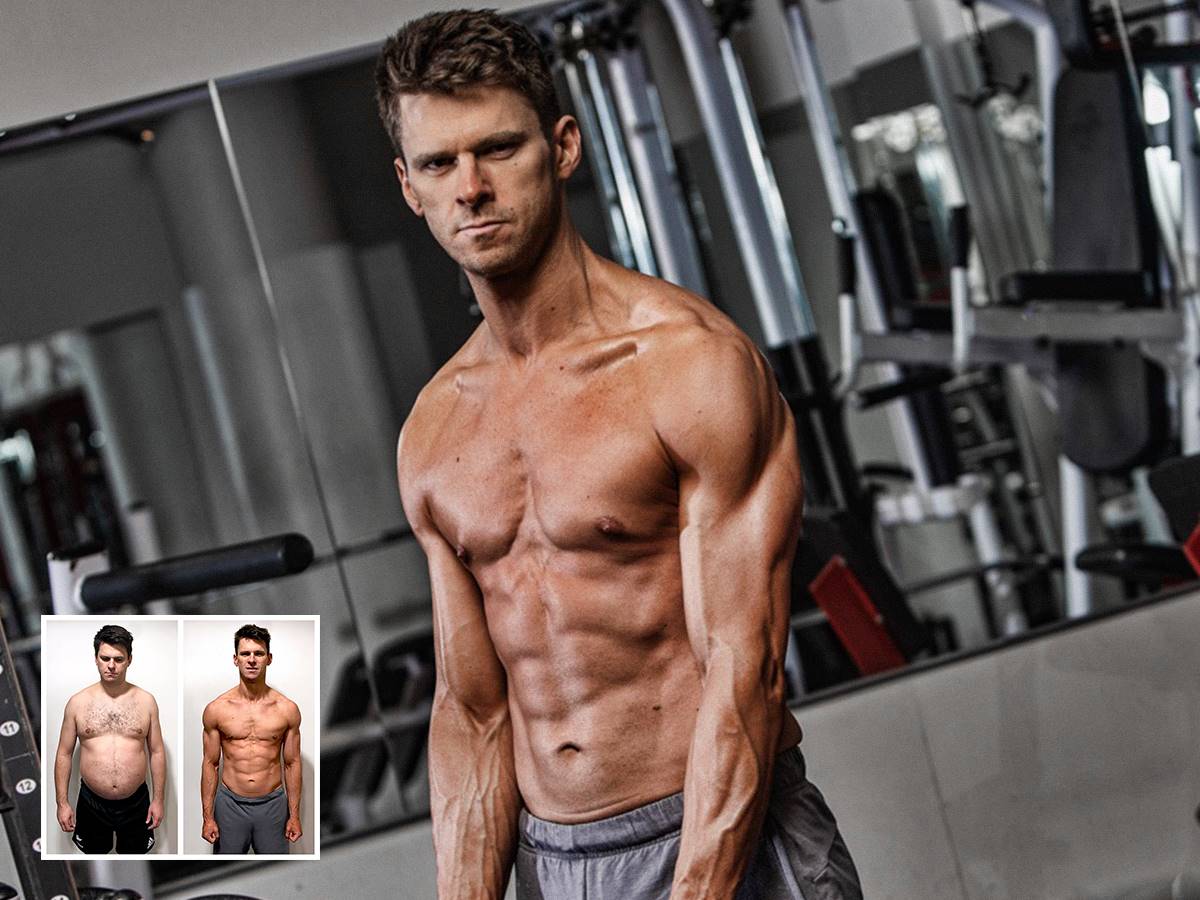
Dan 35kg weight loss helps him be a fitter dad and sharper at work.
What is body recomposition, and is it possible?
Body recomposition means exactly what it sounds like – changing the composition of your body by reducing fat mass while increasing lean tissue.
Put simply, it’s about losing fat and building muscle at the same time.
For many, this concept sounds contradictory. After all, fat loss requires a calorie deficit. Muscle growth usually requires a calorie surplus. So how can the two coexist?
The answer lies in how the body responds to training, nutrition, and recovery under the right conditions. With the right stimulus and support – especially for beginners or those returning from a training break – it is absolutely possible to do both simultaneously.
In scientific terms, body recomposition means increasing fat-free mass (everything in your body that isn’t fat — including muscle, bone, and water) while decreasing body fat percentage. This isn’t just about aesthetics. Increasing your lean mass can improve metabolic health, insulin sensitivity, mobility, and long-term weight maintenance.
We’ve seen it repeatedly: men and women going from skinny fat to lean and muscular in as little as 12 weeks – without bulking, cutting, or extreme measures.
And while recomposition is often easiest in the early stages of training, it’s also possible for more experienced lifters when training quality, diet precision, and recovery are properly aligned.
When is body recomposition most effective?
Recomposition is most effective for people who are new to resistance training or returning after time away. This is often called the ‘newbie gains’ phase – a window where your body is highly responsive to the stimulus of strength training and increased protein intake.
In one study, relatively untrained individuals gained up to 7lbs of muscle in just 12 weeks of lifting [1]. And because their bodies are adapting quickly, they can also shed fat at the same time – provided their nutrition, recovery and training intensity are aligned.
This is why body recomposition is so common among our first-time clients. With minimal previous training volume and no ingrained bad habits to undo, the results can be rapid – bigger lifts, leaner frames, and dramatic visual changes in a short time.
But recomposition isn’t only for beginners.
Clients with prior training experience can still make significant progress if they apply progressive overload and optimise other variables like sleep, stress management and food quality. One study found that well-trained individuals still gained muscle simply by slightly increasing leg training volume over eight weeks [2].
The more advanced you are, the more tightly things need to be dialled in – but the payoff is still there.
Why it works: 3 essential principles of body recomposition
There is no single workout or nutrition formula that triggers body recomposition. But every successful transformation we deliver is grounded in three principles that work in unison.
1. Train with intensity
Muscle growth does not happen just because you go to the gym. It relies on effort that challenges your body – consistent progression, adequate volume, and training that pushes you close to failure.
Most people overestimate how hard they are working. But intensity – not just showing up – is what drives real change. If you still have the energy to scroll Instagram between sets, your effort is likely too low to spark adaptation.
Mental distractions also affect performance. Research has shown that as little as 30 minutes of smartphone use before training can impair perceived strength and increase mental fatigue [3]. 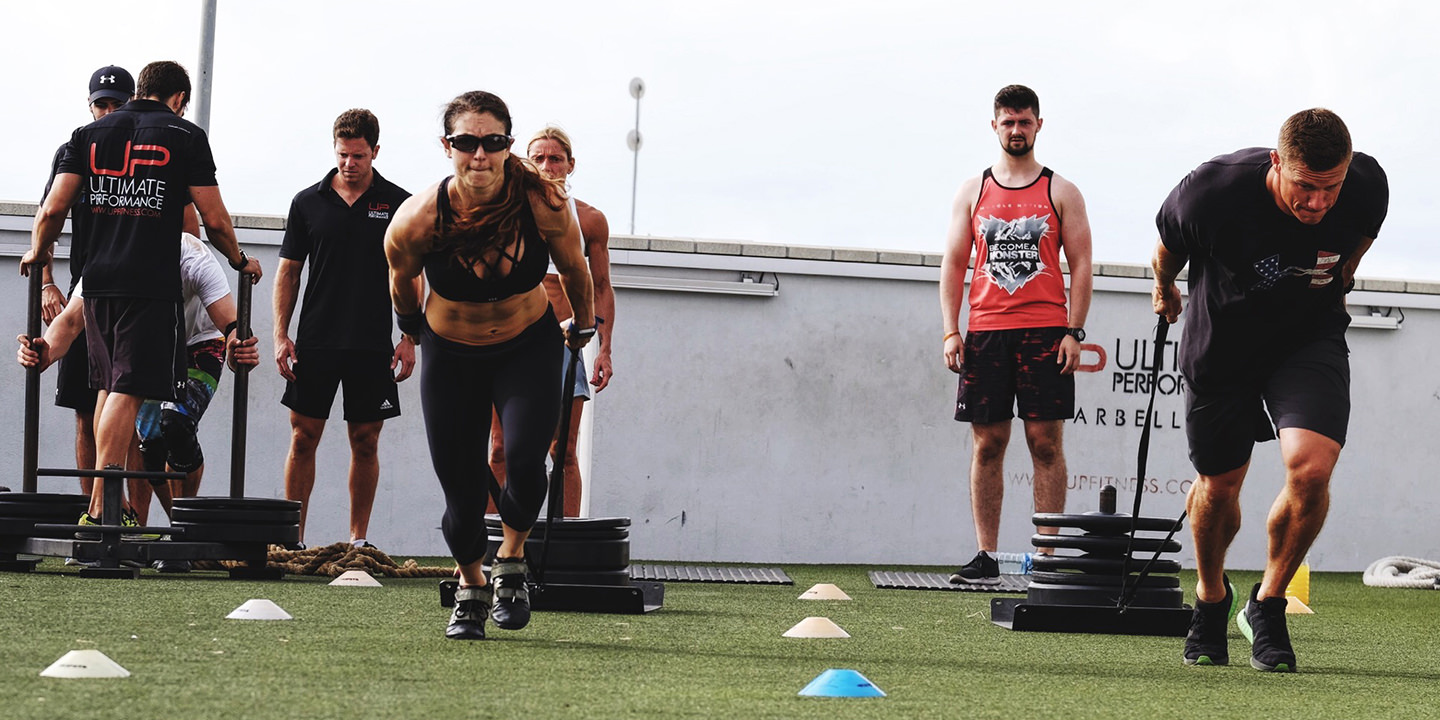
2. Eat smart, not just less
To reduce fat, you need to be in a calorie deficit. But the goal with body recomposition is to lose fat while preserving or gaining muscle. That requires more than just eating less.
A moderate calorie deficit, combined with high protein and quality food sources, gives your body what it needs to retain lean mass while dropping fat. One study found that people consuming 500 fewer calories per day maintained fat-free mass, while those in a more aggressive 800-calorie deficit did not [4].
Protein is critical. Most people aiming for body recomposition will benefit from eating between 2.2 and 2.8 grams of protein per kilogram of lean body mass each day. Splitting this across three to five meals helps optimise muscle retention and satiety [5].
3. Make recovery a priority
Training creates the stimulus. Recovery is where your body responds and improves. Without quality sleep, stress regulation, and downtime, muscle repair and fat loss both stall.
In one study, people who slept 5.5 hours per night during a calorie deficit lost more muscle and retained more fat compared to those who slept for 8.5 hours [6]. Chronic stress has also been shown to interfere with the body’s ability to absorb and use amino acids for muscle repair [7]. Recovery is not an optional extra, it’s one of the most powerful tools for improving body composition.
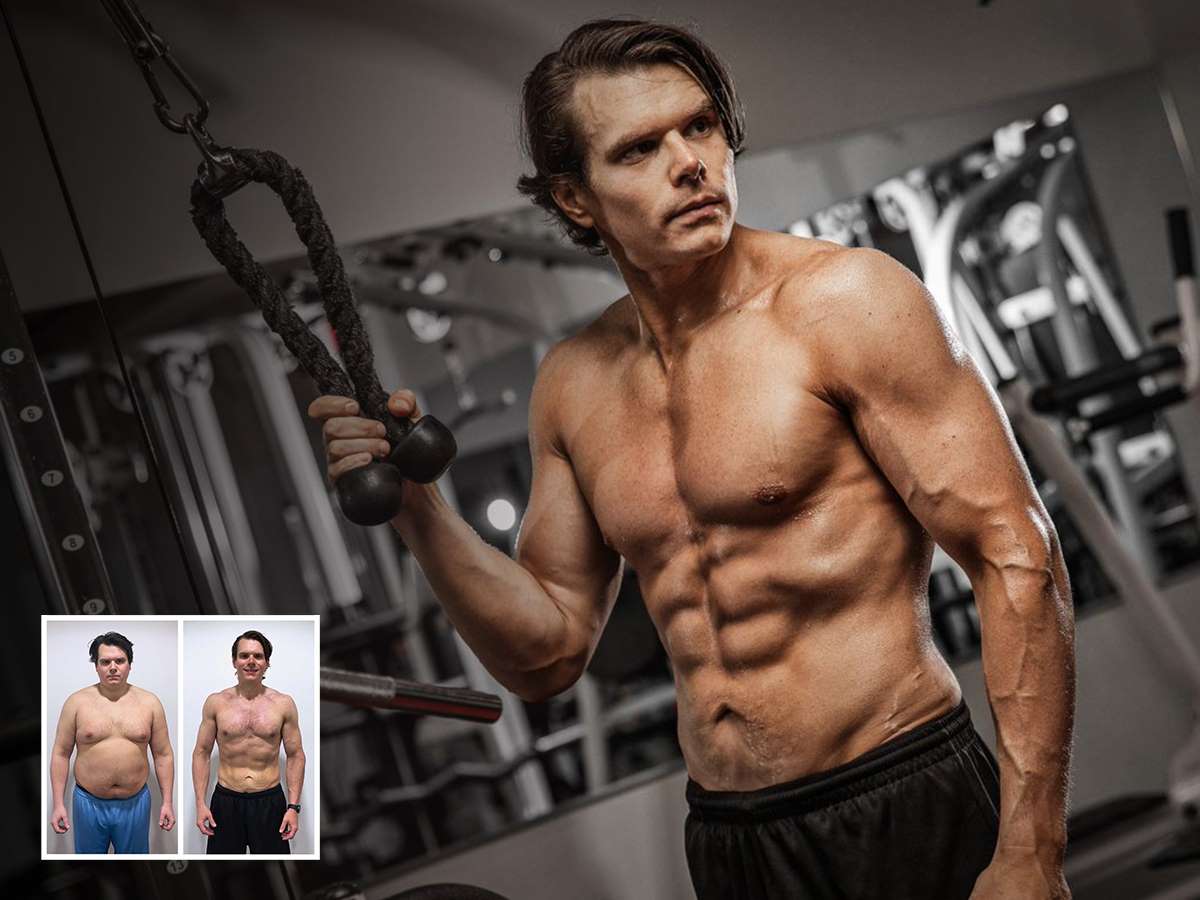
Dan’s 40kg weight loss helps him beat high blood pressure and get abs.
7 reasons your body recomposition progress has stalled
You are training hard and following the plan, but the results are not showing. This can feel frustrating, especially when it looks like everyone else is making progress.
In most cases, the issue is not a lack of effort. It is a gap in execution. These are the seven most common reasons body recomposition results stall and how to correct them.
1. You are not in a calorie deficit
The old adage is true – you cannot outtrain a bad diet. If you are consuming more calories than you burn, your body will not reduce stored fat.
A moderate calorie deficit allows for steady fat loss while maintaining performance and recovery. For most people, the target is to lose between 0.5-1.5% of total body weight per week. This should create visible progress without compromising muscle mass.

2. Your food choices are working against you
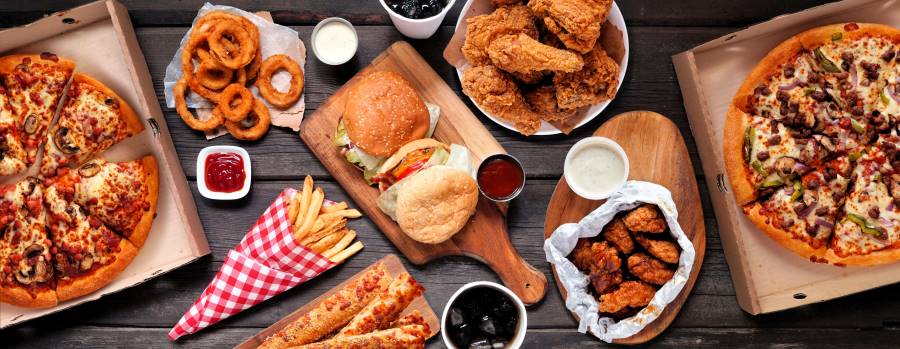
Hitting your calorie target is only part of the equation. What you eat also matters. Relying on highly processed, low-quality foods can make the fat loss process harder and muscle retention more difficult.
Whole foods support better appetite control, stable blood sugar, and energy levels. Research shows that unprocessed ‘whole’ foods are more effective for regulating hunger and improving recovery [7]. Focus on lean protein sources, fibre-rich vegetables and healthy fats. These foods keep you fuller for longer and help your body work efficiently.
It is not just about what fits your macros. The quality of your food choices affects how your body responds to training, how well you recover and how easy it is to stick to your plan over time.
3. You are not moving enough outside the gym
Reducing calories without increasing movement is a weak strategy. Most people underestimate how little they move during the day. If your only physical activity is your workout, you are missing an opportunity to accelerate fat loss.
Daily movement increases energy expenditure without placing extra stress on the body. Aiming for at least 10,000 steps per day is a strong place to start. It improves fat loss, helps better regulate blood sugar, and improves blood flow to your muscles which aids recovery between training sessions.

4. You are not following a progressive training program
It does not matter how often you train or how intense your workouts feel. If your program is not set up to help you progress, you will not build muscle or change how your body looks.
Progressive overload is the foundation of muscle growth. This means gradually increasing the amount of weight you lift or the total training volume over time. If you are lifting the same loads or performing the same number of reps and sets at the same weight every week, your body has no reason to adapt.
Variety is not the same as progress. Swapping exercises too often may feel productive, but it usually means you are having to learn new movements from scratch which can slow progress. Most people get better results by sticking with core lifts across training phases so they can track performance and build true mechanical tension. Progress is far easier to measure when your plan includes familiar exercises performed with greater intent and intensity.
Structured progression comes from doing the basics well and pushing them further. For most people, that means keeping one or two reps in reserve during your early working sets and training closer to failure on the final set [11].

Ahmad builds his ‘perfect body’ in 90 days with targeted strength training and nutrition
5. You are not tracking your progress
If you are not tracking, you are guessing. Many people think they are making progress when they are not. Or they think they are stuck when they are actually improving.
Photos and the scale can take weeks to show change, especially during recomposition. But tracking key data gives you a clear picture of what is working and where adjustments are needed. This includes body weight, skin fold measures, training volume, food intake and step count.
Muscle and fat do not change at the same rate. It is normal to see slower movement on the scale when building lean tissue and losing fat at the same time. That is why tracking more than one metric is essential.

6. Your sleep is poor
Recovery drives results. If your sleep is broken or inconsistent, your body cannot perform or recover as well.
Sleep loss increases hunger, reduces training motivation and slows down fat loss. One study found that people who slept five and a half hours during a calorie deficit lost more muscle and retained more fat than those who slept eight and a half hours [6].
Sleep quality matters as much as quantity. That means aiming for consistent bedtimes, limiting screen time in the evening and creating a calm environment that helps your body wind down.

7. You are not managing stress
Chronic stress can stall progress even when your training and nutrition are on point. Elevated stress hormones can reduce muscle recovery, increase food cravings and make it harder to stay consistent.
Cortisol, the body’s primary stress hormone, interferes with how your body uses amino acids for muscle repair. It also makes it harder to regulate appetite and sleep, which affects every aspect of body composition [7].
Stress will always be part of life. But developing habits to manage it – such as walking, journaling, meditation, or switching off from technology – can make a meaningful difference to your physical results.
How bank boss Sam transformed his physique in 11 weeks.
How to break through your plateau and get results
If you are not seeing visible change, the answer is rarely to do more. It is usually to do better. Most plateaus in body composition change come down to inconsistent execution or missing one of the core elements we discussed above.
Train hard without proper nutrition and you won’t be optimising results. Eat right, but fail to focus on sleep and recovery, and you won’t get the rewards you want. It’s all a balance. It requires a system that makes progress measurable and repeatable. That means accurate tracking, smart food choices, quality training and habits that support recovery – all done habitually.
Do not chase fast results. Do not keep switching strategies. Instead, build momentum by focusing on the variables that actually matter.
Is there a best workout for body recomposition?
There is no specific workout you need to do for body recomposition.
Body recomposition refers to decreasing your stored body fat while maintaining or increasing your level of lean body mass, primarily through muscle. For nearly everyone, this involves weight loss, which means you need to burn more calories than you take in through food. But if we want to ensure that we lose fat and not just overall weight. We need to do two things.
The first is to consume enough high-quality protein that gives the body a reason to tap into muscle and not body fat. The second is to provide the body with a stimulus to maintain and grow new muscle; namely resistance training.
Now, there is no specific ‘workout’ that will allow us to achieve this but some training approaches may allow us to do this better than others. For example, very low rep, heavy resistance training may be sufficient stimulus for an advanced trainee to acquire the amount of ‘training volume’ they need to maintain muscle – as long as they are training close to muscular failure and increasing how much they lift over time.
But a completely new lifter has not yet had a chance to develop the neurological adaptations required to lift very heavy loads safely, neither does low-rep training provide the practice to do so.
At the other end of the scale, very high rep training means you spend a lot of time performing a movement without those reps being ‘effective’. This means that it takes a lot of repetitions before it becomes challenging to the muscle, making it less time efficient.
For the majority of our clients, hypertrophy-style training that uses moderate loads at moderate rep ranges tends to provide enough practice in movements to get strong, while creating the stimulus the body needs to hang onto muscle.
But how that looks precisely, the exercises you perform, the rep ranges you work in or the precise training split you follow may vary significantly depending on your experience and abilities, preferences, and unique anatomical structure.
How long does body recomposition take?
Body recomposition effectively means decreasing your stored body fat levels while maintaining or increasing your level of lean body mass, primarily through muscle.
For nearly everyone, this involves weight loss, which requires consuming fewer calories than you burn.
And by combining this calorie deficit with a high-protein diet and resistance training, you can encourage the body to tap into its stored energy, i.e. body fat, and not hard-earned, metabolically healthy muscle tissue.
How long it takes to achieve a low level of body fat from your current starting point depends on a multitude of factors, such as your genetics, training experience, current body fat levels, your lifestyle, how hard you are willing or able to diet, and more.
We can never know exactly how fast fat loss is occurring or precisely the proportion of weight that is lost as fat or muscle without testing, such as calliper measurements or DEXA scan. And even these assessment methods come with a margin of error.
But we know that the sweet spot for most people is losing between 0.5% to 1.5% of their total body weight per week. This strikes the right balance between effective progress while minimising the risk of muscle loss during the diet.
The amount of muscle you may gain during this ‘recomposition’ period depends on your exercise history and how long you have been training.
If you have been away from exercising for a while or you are a complete beginner, you’ll likely benefit from ‘newbie gains’. This just means that for around 20% effort, you’ll get around 80% reward. But the longer you train, the more effort you have to put in for the same results – think 80% effort for 20% gain. So, the more experienced you are, the less muscle you are likely to build during a recomposition phase.
But we can say is that most of our clients will lose somewhere in the region of 10-12% of their total body weight over a 12-week period if they achieve their weekly targets. However, this varies depending on your starting weight, body composition and how much time you have available to exercise.
How many calories do I need for body recomposition?
This question really could be asking “how long is a piece of string?”!
Everyone is unique so the precise number of calories you need to eat to create the calorie deficit you need for fat loss is highly variable.
It is also a moving target, as you may be very active on one day but may not get out of bed on another if you are not controlling for consistency, i.e. meeting a daily activity target. Clearly, how much energy you burn in these two scenarios will be very different.
This ‘magic number’ depends on your unique genetic make-up, your current body composition, how active you are, how quick you want to lose fat, what your lifestyle is like, and how compliant you can be to a program.
The truth is that this number isn’t so ‘magic’ and is generally a ‘best guess’ starting point that we may need to adjust over time to speed up or slow down progress based on how your body responds.
This is why we tailor everything we do to the client, because there is no one-size-fits-all approach to a body composition transformation.
To estimate the right starting point for an individual, we first use skinfolds and body fat measurements to calculate a calorie goal and macronutrient targets. We also take into account the activity levels the client can commit to, which also has a bearing on the initial calorie goal.
Can I lose fat and gain muscle at the same time?
Yes, depending on your training age. If you have been telling yourself you’ll go to the gym “this week” for the last six months or maybe you’ve never even picked up a dumbbell, you’re in a perfect position to make some great initial gains.
But as your training age (lifting experience) increases, the effort required to keep making these same gains also rises.
However, at Ultimate Performance, we know we can produce these results in even relatively well-trained clients. This is because the quality and intensity of training at Ultimate Performance is unlike any training experience you’ve had before.
And because of this, the training stimulus is novel enough that it can produce more muscle gain than would be otherwise expected during a calorie deficit.
It goes without saying, however, that you have a role in maximising your muscle gain results by ensuring that you eat high-quality foods that set you up for success, managing stress and maximising your rest and recovery.
What foods are the best for body recomposition?
Body recomposition comes down to creating a calorie deficit.
While it does come down to producing a negative energy balance (i.e. burning more calories than you eat), not all calories are created equally.
This is because your body can access a greater proportion of calories from processed foods than it can from whole, unprocessed foods. Processing breaks down at a molecular level, which means your digestive system has to do a lot less work!
As a result, instead of being able to access, say 80% of the calories from a chicken breast, if you eat a highly processed chicken burger, you are more likely to be able to access nearer to 90-100% of those calories.
For example, compare 500 Calories of McDonald’s with that from chicken and broccoli. The calorie ‘price tag’ may be the same, but the net calorie deficit created is greater in the unprocessed option.
This is because unprocessed foods, such as fresh fruit and vegetables, contain high amounts of fibre, which the body cannot fully digest and utilise all the calories. As a result, with unprocessed foods, you not only get more vitamins and fibre, you get a bigger ‘net deficit’ because your body expends more energy in processing the food and harvesting the calories.
Therefore, foods that tend to be better for a body recomposition diet tend to be whole, unprocessed foods. That includes quality protein sources, healthy fats, low-GI carbohydrates and high-fibre fruit and vegetables.
These kinds of foods better support your goals because they are more satiating, less likely to stimulate appetite, keep you fuller for longer, help you recover better, and give you more nutrients and energy so you can feel and perform at your best.
How much protein do I need for body recomp?
For most people who are in a calorie deficit, ensuring that you eat somewhere between 2.2-2.8g per kg of lean body mass is generally a good ballpark target that will keep you satiated and minimise muscle loss.
However, it’s worth bearing in mind that more protein is not always better. This is because the body primarily uses it for tissue repair rather than for energy. So, overeating on protein may take away calories at the expense of fats and carbs, which would be more beneficial for recovery, health and body composition improvements.
Does body recomposition work for “skinny-fat” people?
If you are not overweight but have low levels of muscle mass and excess body fat, this is referred to as ‘skinny fat’.
And there are a host of reasons that improving your body composition is important if you fall within a ‘healthy’ BMI range but have excess body fat.
BMI or Body Mass Index does not account for body composition. It also cannot account for how much fat you store viscerally (around your organs).
If you are ‘skinny fat’ but are often sedentary and do not exercise, your body will also not be able to perform optimally, for example, in the way that it processes and utilises carbohydrates. This could put you at risk of diseases such as heart disease, stroke, or type 2 diabetes in the future.
That’s why we always aim to achieve a low level of body fat first, which will put you in a prime position to make the best use of foods once we bring calories back up after the dieting phase. And there is an added bonus in that nearly everyone will look ‘bigger’ by having better muscle definition when they are lean.
References
[1] Wernbom M, Augustsson J, Thomeé R. The influence of frequency, intensity, volume and mode of strength training on whole muscle cross-sectional area in humans. Sports Medicine. 2007; 37(3):225–264.
[2] Scarpelli M et al. Muscle hypertrophy response is affected by previous resistance training volume in trained individuals. Journal of Strength and Conditioning Research. 2022; 36(4):1153–1157.
[3] Gantois P et al. Mental fatigue from smartphone use reduces volume-load in resistance training: a randomised single-blinded cross-over study. Perceptual and Motor Skills. 2021; 128(4):1640–1659.
[4] Garthe I et al. Effect of two different weight-loss rates on body composition and strength and power-related performance in elite athletes. International Journal of Sport Nutrition and Exercise Metabolism. 2011; 21(2):97–104.
[5] Helms E et al. The Muscle and Strength Pyramid: Nutrition. 2017.
[6] Nedeltcheva AV et al. Insufficient sleep undermines dietary efforts to reduce adiposity. Annals of Internal Medicine. 2010; 153(7):435–441.
[7] Peeters GM et al. The relationship between cortisol, muscle mass and muscle strength in older persons and the role of genetic variations in the glucocorticoid receptor. Clinical Endocrinology. 2008; 69(4):673–682.
[8] Howarth NC, Saltzman E, Roberts SB. Dietary fiber and weight regulation. Nutrition Reviews. 2001; 59(5):129–139.
[9] Pasiakos SM et al. Effects of high-protein diets on fat-free mass and muscle protein synthesis following weight loss: a randomised controlled trial. FASEB Journal. 2013; 27(9):3837–3847.
[10] Benton D, Young HA. Reducing calorie intake may not help you lose body weight. Perspectives on Psychological Science. 2017; 12(5):703–714.
[11] Helms E et al. The Muscle and Strength Pyramid: Training. 2017.
[12] Schoenfeld BJ et al. Resistance training volume enhances muscle hypertrophy but not strength in trained men. Medicine and Science in Sports and Exercise. 2019; 51(1):94–103.
[13] Schoenfeld BJ et al. Effects of low vs high-load resistance training on muscle strength and hypertrophy in well-trained men. Journal of Strength and Conditioning Research. 2015; 29(10):2954–2963.

