


If you want to transform your body, you need to get your nutrition right.
When it comes to diet, what most people struggle with is carbohydrates.
How many carbs should you eat? Which types are best? When should you eat them if you want to lose fat while still training hard?
We break down how carbs really work, what they do in your body, and how to use them intelligently for fat loss, muscle, performance, and good metabolic health.
Are carbs good or bad for fat loss?
Carbohydrates aren’t good or bad. They’re a simply a tool.
The problem is that carbs are often blamed for fat gain when, in reality, they’re usually just the easiest place to overconsume calories. Highly palatable foods that combine carbohydrates and fats are easy to eat in large amounts, especially when activity levels are low. That doesn’t mean carbs are the enemy, it just means they need to be used with a little more care and forethought.
From a fat loss perspective, what ultimately determines whether you lose or gain body fat is your overall energy balance. If you consistently consume more calories than you burn, you will gain fat. If you create and maintain a calorie deficit, you will lose fat. Carbohydrates don’t magically override that process.
Where carbs do influence fat loss is indirectly – through hunger, energy levels, training performance, and adherence. Too many carbs, particularly when activity levels don’t justify them, can make it harder to stay in a calorie deficit. Too few carbs for too long can leave you feeling flat, reduce training quality, disrupt sleep, and make diets feel harder to stick to long term.
This is why extreme approaches to carbs aren’t best for most people. Eliminating them completely isn’t inherently superior for fat loss, just as eating them freely isn’t appropriate for everyone.
Used properly, carbohydrates can support fat loss by helping you train harder, recover better, and adhere to your nutrition plan more sustainably. Used poorly, they can make maintaining a calorie deficit needed for fat loss unnecessarily difficult.
The real question isn’t whether carbs are good or bad – it’s how many you need, when they’re most useful, and how to match them to your body composition, training, and goals.

How many carbs should you eat to lose weight?
There isn’t a single number that works for everyone. How many carbs you should eat depends on how lean you are, how much muscle you carry, how hard and how often you train, as well as how your body responds to carbohydrates.
That said, there are clear patterns we see repeatedly when coaching clients at Ultimate Performance.
As a general rule, the leaner and more active you are, the more carbohydrates you can tolerate and use productively. Someone with higher body fat, lower muscle mass, and a sedentary lifestyle will usually do better on fewer carbs. Someone training hard several times per week, lifting weights, and carrying more muscle will typically need more.
For example, a new client with higher body fat and limited training history will often start with very low amounts of starchy carbohydrates. Most of their carbs come from vegetables, with the focus on protein intake and overall calorie control. This simplifies the diet, improves insulin sensitivity, and produces fast early results.
In contrast, a leaner individual training intensely multiple times per week can usually include a moderate amount of starchy carbohydrates without compromising fat loss. In these cases, carbs support training quality, recovery, and muscle retention, which are all critical for long-term progress.
For most people starting fat loss, “low carb” tends to mean keeping starchy carbohydrates minimal – often under 100g per day – with the majority coming from vegetables, especially things like kale, spinach, broccoli, and chard.
As training volume increases and body fat comes down, carbohydrate intake can usually rise into a moderate range, often 150–250g per day, without compromising fat loss – provided total calories and fat intake are controlled.
Another important principle is that carbohydrate intake should be balanced against fat intake. Diets that are high in both fats and carbs are the easiest way to overshoot calories. When carbs are higher, fats usually need to come down. When fats are higher, carbs typically need to be lower. Reducing both carbs and fats aggressively at the same time is not a good idea.
Rather than chasing an exact gram target, the smarter approach is to use carbs deliberately. Set your protein intake first. Establish a calorie intake that supports fat loss. Then adjust fats and carbohydrates to find the balance that allows you to train well, manage hunger, sleep properly, and stay consistent.

Carbs and insulin – what actually matters
Carbohydrates are often blamed for fat gain because of their relationship with insulin. You’ve probably heard some version of the claim that insulin “stops fat burning” or that eating carbs automatically pushes your body into fat storage.
There’s a grain of truth in that idea, but it’s largely misunderstood.
Insulin’s primary role is to manage blood sugar. When you eat carbohydrates, insulin rises to help move glucose out of the bloodstream and into tissues like muscle and liver, where it can be used for energy or stored as glycogen. During this period, fat breakdown is temporarily reduced. That’s normal physiology; it’s not a problem.
Throughout the day, your body constantly shifts between short periods of fat storage and fat burning every time you eat. What determines fat loss or gain is not these short-term fluctuations, but what happens over a full day. If you’re in a calorie deficit across 24 hours, fat loss still occurs, regardless of how often insulin rises.
Where insulin does matter is in how well your body handles carbohydrates. People who are more insulin sensitive tend to partition carbs toward muscle and liver more effectively. Those who are insulin resistant are more likely to store excess energy as fat. This is why body composition, activity level, and training history all influence how many carbs someone can tolerate.
Resistance training plays a major role here. Lifting weights improves insulin sensitivity and increases the amount of muscle tissue available to take up and store carbohydrates. This isn’t just theory – research has shown that resistance training increases insulin-mediated glucose uptake in skeletal muscle, even without significant changes in body weight. In practical terms, this means carbs are more likely to be directed into working muscle for fuel and recovery, rather than contributing to fat storage. (1)
The key takeaway is simple. Carbs don’t cause fat gain just because they raise insulin. Fat gain occurs when carbohydrate intake consistently exceeds what your body needs relative to your activity level, muscle mass, and total calorie intake. When carbs are matched to training and energy demands, insulin helps direct them into muscle for fuel and recovery, rather than contributing to fat storage.

Why carbs can support training and muscle maintenance during fat loss
When fat loss is the goal, many people instinctively reduce carbohydrates. That’s not inherently wrong – and it’s an approach that can work for many people – but when training is part of the plan, it’s important to understand what role carbs can play, and when they actually matter.
Resistance training places a demand on muscle glycogen, particularly during higher-volume or higher-intensity sessions. When carbohydrate availability is very low, some people – especially leaner individuals or those training frequently – notice that performance, recovery, or overall training quality begins to suffer. Others function perfectly well on lower-carb approaches, particularly with lower training volumes.
This matters because successful fat loss isn’t just about just seeing the number on the scale go down. Because we’re not just looking to lose weight – weight loss can include muscle, water, and glycogen as well as fat. What we want is to lose fat alone – that’s what actually improves body composition, health, and long-term outcomes most optimally.
Preserving muscle during fat loss helps in several practical ways. Muscle increases daily energy expenditure, improves how efficiently the body handles carbohydrates, and makes it easier to maintain results once dieting ends. Losing too much muscle during fat loss often leads to poorer metabolic health and faster fat regain later.
In this context, carbohydrates can be useful when they support productive training. Strategic intake doesn’t mean eating more carbs indiscriminately. It means matching carbohydrate amount and timing to training demands – using carbs where they help sustain training intensity, recovery, and consistency, while keeping total calories appropriate for fat loss.
For some people, that might mean very low carb intake with no downside. For others, especially as training demands increase or body fat comes down, including carbohydrates can make it easier to train well enough to preserve muscle and maintain progress.
The goal isn’t to maximise or eliminate carbs. It’s to use them only where they add value – supporting training quality, muscle retention, and sustainable fat loss.

Carb timing – when carbs are most useful
How many carbs you eat matters. But when you eat them can influence how you feel, how you train, and how easy fat loss is to maintain too.
Carbohydrates tend to be most useful when they’re eaten around training. Resistance training increases the muscle’s ability to take up and use carbohydrates efficiently, directing them toward muscle glycogen rather than storage elsewhere. Placing carbs after training takes advantage of this effect, supporting recovery and future training performance without undermining fat loss, provided overall calorie intake is controlled.
This is one reason many people do well with little or no starchy carbohydrates earlier in the day. Keeping carbs lower during the morning and early afternoon often helps maintain stable energy levels, sharper focus, and better appetite control. Large carb-heavy meals earlier in the day can leave some people feeling sluggish or hungry again soon after, which isn’t helpful during fat loss.
Carbohydrates can also be useful later in the day. For some people, carbs in the evening promote relaxation and better sleep. This is partly due to their effect on serotonin, a neurotransmitter involved in calming the nervous system and supporting sleep. While that drowsy, heavy feeling after a big carb-heavy meal isn’t ideal mid-morning, it can be helpful in the evening when winding down is the goal.
Sleep quality matters more than most people realise when trying to lose fat. Poor sleep increases hunger, reduces impulse control around food, and makes training feel harder over time. If evening carbs help improve sleep and make a diet easier to stick to, they’re often doing more good than harm.
Interestingly, research from Sofer et al in individuals with obesity has shown that when calories are controlled, concentrating carbohydrate intake later in the day can lead to greater fat loss, improved hunger control, and improvements in markers of insulin resistance and metabolic health compared to a more conventional carb distribution (2).
However, none of this means carbs must be eaten at specific times, or that other approaches are wrong. Timing is a tool, not a rule. The best approach is the one that supports good training, stable energy, proper sleep, and long-term dietary adherence.

Low carb vs moderate carb – how to choose what works for you
There’s no universally “best” carbohydrate intake. Both low carb and moderate carb approaches can work for fat loss – provided protein intake is sufficient and total calories are controlled.
Lower carbohydrate intakes often work well for people who are busy, stressed, less active, or starting fat loss with higher body fat. In practical terms, “lower carb” usually means keeping starchy carbohydrates minimal – often under around 100g per day – with most carbs coming from vegetables and incidental sources.
One of the main benefits of this approach is simplicity. Removing starchy carbs from certain meals means there’s less weighing, measuring, or decision-making. For example, a meal of eggs, mushrooms, and spinach is easier to execute consistently than one that requires hitting a precise portion of rice or oats. For many people, that simplicity improves adherence and appetite control.
Lower carb approaches also tend to produce faster early scale weight loss for people with a lot to lose. This is due to reduced glycogen and water retention, and not all body fat. But quick initial results like this can be motivating and help build momentum. In people with higher body fat, it also improves insulin sensitivity and how the body handles carbohydrates over time.
Moderate carbohydrate intakes often suit people who train more frequently, carry more muscle, or place a higher priority on training performance. In these cases, including carbohydrates can support harder training sessions, better recovery, and muscle retention – but only when carb portions and timing are controlled. Without structure, higher carbs combined with higher fats is one of the easiest ways to overshoot calories.
For many people, the most effective approach evolves over time. Starting fat loss with lower carbs is often the simplest way to regain control of calories and appetite. As body fat comes down and training demands increase, carbohydrates can be reintroduced strategically to support performance without derailing progress.
If there’s a single rule worth remembering, it’s this: the best carb intake is the one that lets you train consistently, manage hunger, sleep well, and stick to the plan long enough to see results.

What are the best carbs to eat when dieting?
When carbs are included in a fat loss diet, quality matters.
The goal isn’t simply to include any and every source of carbohydrates because they “fit your macros”. Different carb sources affect blood sugar, appetite, and eating behaviour very differently. Choosing the right types makes fat loss easier to control and far more sustainable.
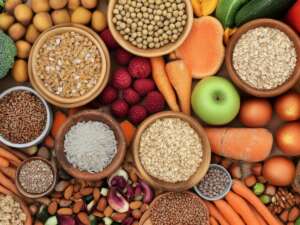
For most people, the best carbohydrate sources during fat loss are minimally processed foods that digest predictably and are easy to portion. Foods like potatoes, rice, oats, quinoa, and fruit tend to work well when quantities are controlled. They provide usable energy for training without driving excessive hunger or cravings.
Vegetables should form the foundation of carb intake regardless of approach. They provide fibre, micronutrients, and volume with very little caloric cost, helping manage appetite and support overall health. Even on lower-carb diets, vegetables still contribute useful carbohydrates without the downsides associated with more refined sources.
Highly processed carbohydrates are where problems usually arise. Foods like pastries, biscuits, crisps, and pizza are often ultra-processed, low in fibre, and stripped of many nutrients. They’re also designed for hedonic eating – engineered to be easy to overconsume and hard to stop eating. When carbohydrates are combined with fats in this way, calorie intake can climb rapidly without improving training, recovery, or satiety.
Liquid carbohydrates can create similar issues. Fruit juices, smoothies, and sugary drinks deliver calories quickly with little effect on fullness, making them a poor choice during fat loss unless used deliberately in specific training contexts.
The best carb sources are ultimately the ones you can control. Foods that are repeatable, easy to portion, and don’t trigger overeating are far more useful than any food that technically “fits” on paper.
Carbs don’t need to be exotic or flexible to be effective. They need to support appetite control, training, and consistency – the things that actually determine results.
How to actually set your carb intake
If you want a more concrete answer on carbs, it helps to zoom out.
Carbohydrates aren’t chosen in isolation. They sit inside a bigger framework that determines energy balance and whether fat loss actually happens.
The first step is understanding roughly how many calories your body needs each day based on your size, activity level, and training volume. From there, fat loss requires a calorie deficit – for most people, around 300–500 calories per day is a sustainable starting point.
Once calories are set, protein comes first. During fat loss, most people do best with roughly 1.5–2.0g of protein per kilogram of bodyweight. This supports muscle retention, recovery, and appetite control.
Only after protein is accounted for do fats and carbohydrates come into play. The remaining calories are divided between them based on how you train, how active you are, and how your body responds, or which you prefer or feel better on.
For many people, the simplest and most effective approach is to start with lower carbohydrates and build them up gradually. This makes calorie control easier and helps identify how many carbs you can tolerate while still losing fat, training well, and being able to adhere to the calorie deficit.
What tends not to work is cutting both fats and carbs aggressively at the same time. That approach often leads to low energy, poor training quality, disrupted sleep, and diets that are hard to stick to.
This is why carbs often feel confusing. They’re not the problem – they’re just one variable inside a system that needs to be set up properly.
If you want to understand that full process in depth – from calories and protein to fats, carbs, and meal structure – it’s laid out step by step in our Body Transformation Meal Plan Design book. The principles are the same ones we use when setting up nutrition plans for clients who want predictable, long-term results.

Frequently asked questions about carbs and fat loss
Do carbs make you gain fat?
Carbs don’t cause fat gain on their own. Fat gain happens when total calorie intake consistently exceeds what your body uses. Carbohydrates can contribute to fat gain if they’re easy to overeat or mismatched to activity levels, but they don’t override calorie balance.
Should you cut carbs completely to lose fat?
You don’t need to. Some people do well on very low carb diets, especially early in fat loss. Others train and feel better with some carbs included. The best approach is the one that allows you to stay in a calorie deficit while training well and managing hunger.
Are carbs at night bad for fat loss?
No. Eating carbs at night doesn’t automatically lead to fat gain. For some people, evening carbs improve relaxation and sleep quality, which can make fat loss easier to sustain. What matters most is total daily intake, not the clock.
Do you need carbs to lift weights?
Not always. Many people train perfectly well with low carbohydrate intake, particularly at lower training volumes. As training demands increase, or as body fat levels drop, some people find that including carbs helps support performance and recovery. This varies from person to person.
What happens if carbs are too low for too long?
For some people, very low carb intake over long periods can lead to low energy, poor sleep, reduced training quality, or stalled fat loss due to reduced adherence. Others tolerate it well. Monitoring how you feel, train, and recover is key.
Are some carbs better than others?
Yes. Minimally processed carbs that are high in fibre and easy to portion tend to support appetite control and training better than highly processed, ultra-refined options designed for overconsumption.
Conclusion – how to use carbs properly
Carbohydrates aren’t the problem. Misunderstanding how to use them is.
You don’t need to fear carbs, cut them out entirely, or force them into every meal. What matters is matching carbohydrate intake to your body, your training, and your goals. When carbs are used purposefully – in the right amounts, from the right sources, and at the right times – they can support fat loss, training performance, muscle retention, and long-term metabolic health.
For some people, that means keeping carbs low to simplify the diet and control appetite. For others, it means including them strategically to support harder training and better recovery. Neither approach is inherently right or wrong. The right approach is the one you can apply consistently while still training well, sleeping properly, and staying in control of calories.
This is where most people struggle. Without structure, carbs are easy to underuse or overuse. And when progress is affected, it’s often not because carbs are “bad” – it’s because they’re being applied without context.
If you want fat loss that lasts, the goal isn’t perfection. It’s just using them intelligently with a little planning and consistency. Understanding how carbs fit into your overall program – or having an expert handle that decision-making for you – removes guesswork and makes results far more predictable.
References
(1) Holten MK, Zacho M, Gaster M, Juel C, Wojtaszewski JFP, Dela F (2004)
Strength training increases insulin-mediated glucose uptake, GLUT4 content, and insulin signalling in skeletal muscle in patients with type 2 diabetes, Diabetes, 2004;53(2):294–305.
(2) Sofer S, Stark AH, Madar Z (2011) Greater weight loss and hormonal changes after 6 months diet with carbohydrates eaten mostly at dinner, Obesity (Silver Spring), 2011;19(10):2006–2014.

